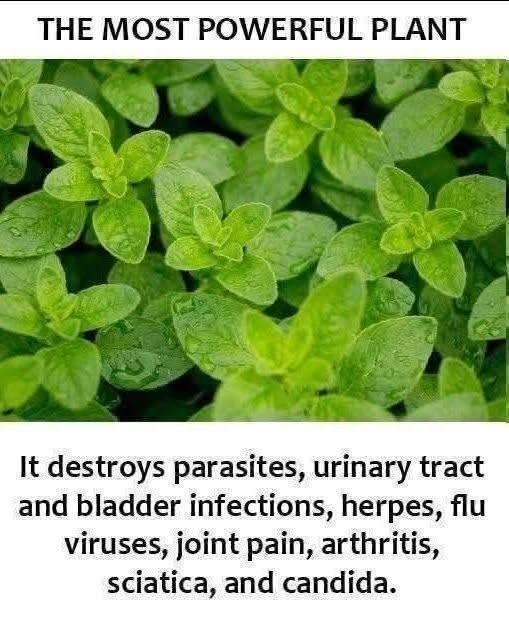
Oregano (Origanum vulgare): Is it
really “the most powerful plant”?
Oregano
is a medicinally interesting herb, but calling it “the most powerful plant” is marketing language rather than a scientific conclusion.
Its leaves and oil contain compounds such as carvacrol and thymol, which have antimicrobial and antioxidant activity in laboratory studies. However, laboratory effects don’t automatically mean oregano can treat infections or diseases in humans.
Potential uses
Research has investigated oregano and oregano oil for:
- Antioxidant and anti-inflammatory effects
- Certain digestive symptoms
- Antimicrobial activity
- Some metabolic and respiratory health applications
The evidence for many of these uses in humans is still limited or inconsistent, so oregano shouldn’t replace prescribed treatment.
⚠️ Oregano oil is much stronger
Oregano used as a culinary herb is generally quite different from concentrated oregano essential oil. Undiluted essential oil can irritate the mouth, throat, stomach, or skin. It can also potentially interact with medications.
Pregnant or breastfeeding people, children, and people taking regular medications should be particularly cautious with concentrated herbal products.
Bottom line: Oregano is a useful herb with interesting biological properties, but there is no credible evidence that it is the most powerful plant or a cure for multiple diseases.