While most discussions around sleep focus on duration and bedtime routines, your physical posture during the night exerts a direct, continuous influence on your spinal mechanics, respiratory function, and digestive health.
—
## 1. Side Sleeping (Lateral)
Over 60% of adults naturally spend most of the night on their side, making it the most prevalent posture.
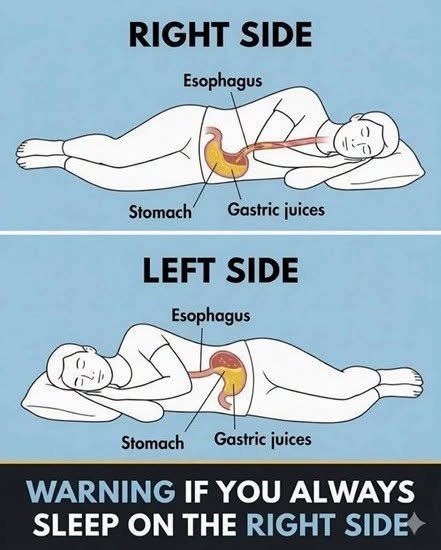
* **Pros:** Keeps airways open, reducing snoring and obstructive sleep apnea symptoms. **Left-side sleeping** specifically prevents stomach acid from flowing upward into the esophagus due to gastric anatomy, making it ideal for managing acid reflux/GERD.
* **Cons:** Can lead to shoulder nerve compression or hip misalignment if the knees slide forward without support.
* **Optimization:** Place a medium-firm pillow between your knees to keep your hips, pelvis, and lumbar spine in neutral alignment.
## 2. Back Sleeping (Supine)
Sleeping flat on your back distributes body weight evenly across your body’s largest surface area.
* **Pros:** Minimizes pressure points on specific joints and maintains natural spinal curves when properly supported. It also eliminates skin pressure on the face, avoiding facial compression creases.
* **Cons:** Gravity pulls the tongue and soft tissues toward the back of the throat, significantly worsening snoring, acid reflux, and sleep apnea.
* **Optimization:** Place a small pillow under your knees to reduce tension on your lower back, and use an ergonomic head pillow that supports the natural curve of your neck without tilting your head too far forward.
## 3. Stomach Sleeping (Prone)
Stomach sleeping is generally considered the least advantageous position for overall musculoskeletal health.
* **Pros:** Temporarily reduces snoring and upper airway collapse.
* **Cons:** Requires turning your head to one side for extended periods, putting severe twisting stress on the cervical vertebrae and neck muscles. It flattens the natural arch of the spine, placing prolonged strain on the lower back.
* **Optimization:** Use a very thin pillow under your head (or none at all) and place a flat pillow under your pelvis to lift your lower back into a more neutral alignment.
—
| Goal / Condition | Recommended Position | Practical Technique |
| — | — | — |
| **Acid Reflux / GERD** | Left Side | Sleep on your left side with an elevated torso or pillow wedge. |
| **Snoring & Sleep Apnea** | Side (Left or Right) | Use a body pillow to prevent rolling onto your back. |
| **Lower Back Pain** | Back or Side | Back with pillow under knees, or Side with pillow between knees. |
| **Pregnancy** | Left Side | Use a contoured body pillow to maintain left-side posture and support the abdomen. |