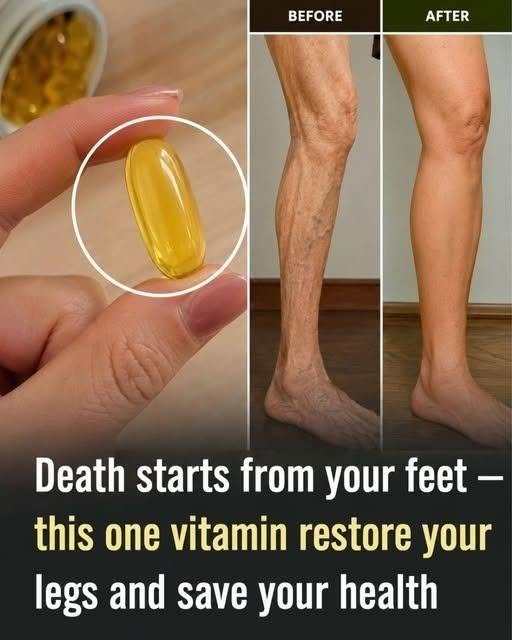
When your legs constantly feel heavy, sluggish, or plagued by that unsettling “dead feet” sensation—where limbs feel weighted down, tingly, or disconnected—it is rarely just a sign of “getting older” or standing too long. Your lower extremities depend on a precise interplay of nerve signaling, micro-circulation, and cellular energy.
When that system falters, specific nutritional deficiencies are frequently at the root.
The Heavy-Hitters: Key Nutrients for Dead Feet and Heavy Calves
-
1. Vitamin B12 (The Nerve Conduction Master)
-
What it does: Vitamin B12 is essential for maintaining the myelin sheath—the protective insulation around your peripheral nerves.
-
The deficiency link: When B12 drops, nerve signals from your brain to your feet misfire or slow down. This triggers peripheral neuropathy symptoms, including numbness, prickling “pins and needles,” deadened sensations in the soles of the feet, and general weakness.
-
-
2. Vitamin B1 (Thiamine) (The Cellular Energy Driver)
-
What it does: Thiamine helps convert carbohydrates into cellular energy and is vital for muscle and nerve function.
-
The deficiency link: Severe thiamine deficiency leads to heavy, weak calves and fluid retention (a classic hallmark of clinical beriberi), but even subclinical low levels can leave your legs feeling leaden and exhausted after minimal exertion.
-
-
3. Magnesium (The Muscle Relaxer & Circulation Supporter)
-
What it does: Magnesium regulates neuromuscular signals, allowing muscle fibers to contract and smoothly relax. It also helps blood vessels dilate, improving micro-circulation down to your toes.
-
The deficiency link: Without enough magnesium, muscles remain in a micro-state of tension or spasm, leading to heavy calves, nocturnal cramps, and restless leg sensations.
-
-
4. Iron (The Oxygen Carrier)
-
What it does: Iron is required to build hemoglobin, which carries oxygen-rich blood all the way down to your lower legs.
-
The deficiency link: Low ferritin (stored iron) is one of the leading hidden drivers of heavy, aching legs and the irresistible urge to move them, heavily overlapping with Restless Legs Syndrome (RLS).
-
Other Non-Nutritional Culprits to Rule Out
While vitamins play a massive role, heavy calves and dead feet can also stem from mechanical or circulatory roadblocks:
-
Chronic Venous Insufficiency (CVI): The one-way valves in your leg veins weaken, allowing blood to pool in your calves rather than efficiently pumping back up to your heart.
-
Spine Compression: Minor lumbar compression (such as a pinched nerve or mild stenosis in the lower back) can dull sensations in the feet and make the legs feel like they are dragging through mud.