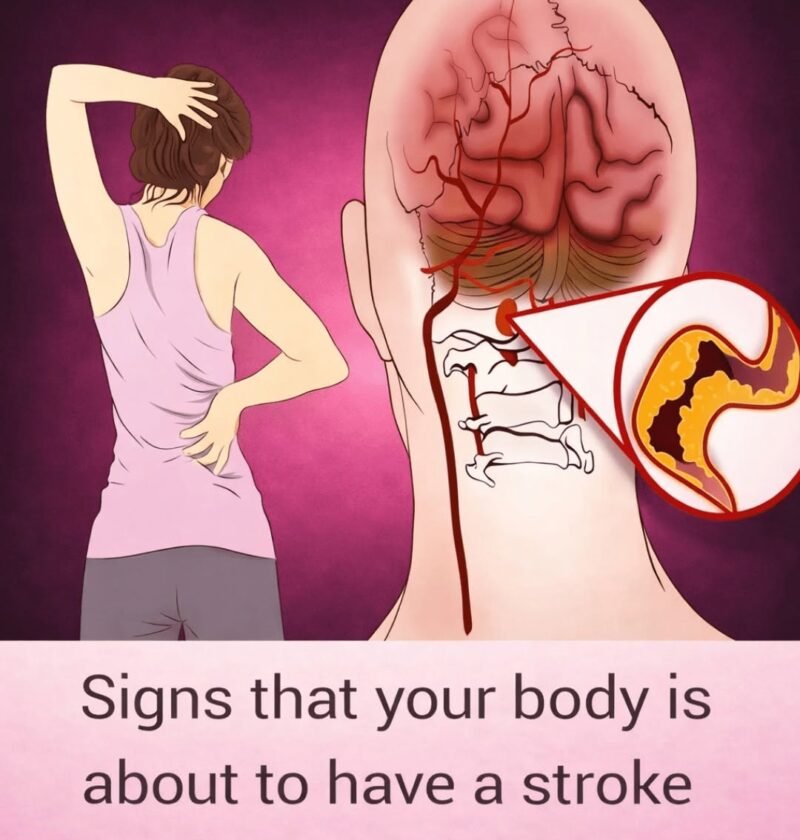
A stroke occurs when blood flow to a part of the brain is blocked or a blood vessel bursts, starving brain cells of oxygen. Because brain tissue begins to die within minutes, recognizing the early warning signs can mean the difference between full recovery and permanent disability or death.
While medical professionals widely use the acronym FAST (Face drooping, Arm weakness, Speech difficulty, Time to call 911), strokes can present with a broader range of sudden neurological symptoms.
The Core FAST Signs (The Most Common Indicators)
-
Sudden Facial Droop: One side of the face may droop or feel numb. If you ask the person to smile, the smile will be uneven or one-sided.
-
Sudden Arm or Leg Weakness: Sudden numbness or weakness in one arm, leg, or one entire side of the body. A classic test is asking the person to raise both arms—if one drifts downward involuntarily, it’s a major red flag.
-
Slurred or Impaired Speech: Difficulty speaking, slurred words, or a sudden inability to understand what other people are saying. They may struggle to form coherent sentences when asked a simple question.
-
Time to Call Emergency Services: If someone exhibits any of these classic signs, note the exact time the symptoms started and call emergency services immediately. Quick intervention with clot-busting drugs (like tPA) or mechanical thrombectomy is time-sensitive.
Additional Early Warning Signs
Because strokes affect different regions of the brain, symptoms can vary widely. Other critical warning signs include:
-
Sudden Vision Changes: A sudden loss of vision in one or both eyes, blurring, double vision, or a dark shadow cutting across your field of view.
-
Sudden, Severe “Thunderclap” Headache: A violent, blinding headache that strikes with no apparent cause, often described as “the worst headache of my life.” This is particularly common in hemorrhagic strokes (burst blood vessels).
-
Sudden Loss of Balance or Coordination: A sudden feeling of unsteadiness, stumbling, dizziness, or a complete loss of coordination (ataxia), making it difficult to walk or stand upright.
-
Sudden Confusion or Disorientation: A abrupt change in mental state, sudden trouble comprehending instructions, memory confusion, or uncharacteristic unresponsiveness.
-
Sudden Numbness on One Side: Sudden, profound pins-and-needles or total loss of sensation restricted to one vertical half of the body (e.g., the right arm and right leg together).
-
Sudden Difficulty Swallowing: A sudden inability or difficulty swallowing saliva, liquids, or food, sometimes accompanied by choking or drooling.
The Golden Rule: Act FAST
Every minute during a stroke, millions of brain cells are lost. Never wait to see if symptoms “wear off” or go away on their own. Even if transient symptoms resolve quickly (which can signal a Transient Ischemic Attack or “mini-stroke”), it is a medical emergency that requires immediate evaluation to prevent a major, life-threatening stroke.