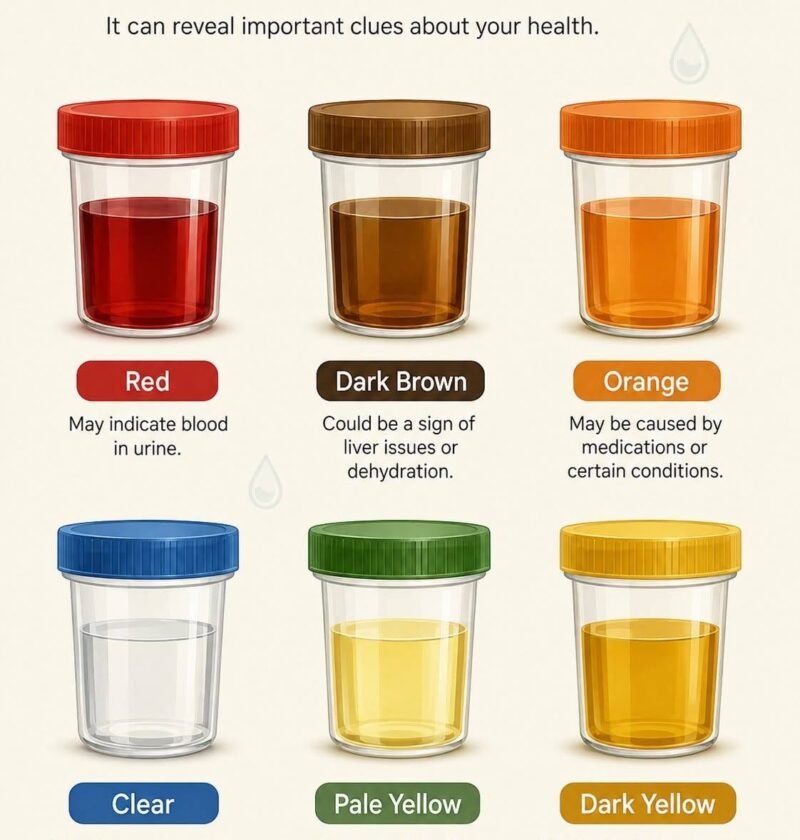
Urine color can provide clues, but it can’t diagnose a health condition by itself. Hydration, foods, vitamins, and medications can all change urine color.
What different colors may mean
🟨 Pale yellow: Usually normal and often indicates good hydration.
🟡 Dark yellow/amber: Often means your urine is concentrated, commonly from not drinking enough fluids.
🟠 Orange: Can occur with dehydration or certain medications. If it persists, it deserves medical attention.
🩷 Pink/red: May be caused by beets or some medications, but it can also indicate blood in the urine and should be checked.
🟤 Brown/tea-colored: Can occur with severe dehydration, certain medications, liver problems, or muscle breakdown and warrants medical evaluation if unexplained.
🟢/🔵 Green or blue: Uncommon; certain medications, dyes, or infections can cause it.
☁️ Cloudy/milky: Sometimes associated with urinary infection, crystals, or other urinary-tract problems.
🚨 Don’t ignore these
Seek medical advice for persistent unexplained changes, especially red/brown urine, blood or clots in the urine, pain when urinating, fever, severe back/flank pain, or yellowing of the skin or eyes.
And don’t use urine color alone to decide how much water you need. Clear urine all the time isn’t necessarily better; excessive water intake can also be harmful.