Blackening or tarnishing on silver isn’t actually dirt—it is a chemical reaction. When silver reacts with sulfur compounds in the air (like hydrogen sulfide) and moisture, it forms a dark layer of silver sulfide.
The good news is that you can completely reverse this reaction and restore silver to a brilliant, mirror-like shine without harsh scrubbing. Depending on how delicate or valuable your silver is, here are the three most effective ways to clean it.
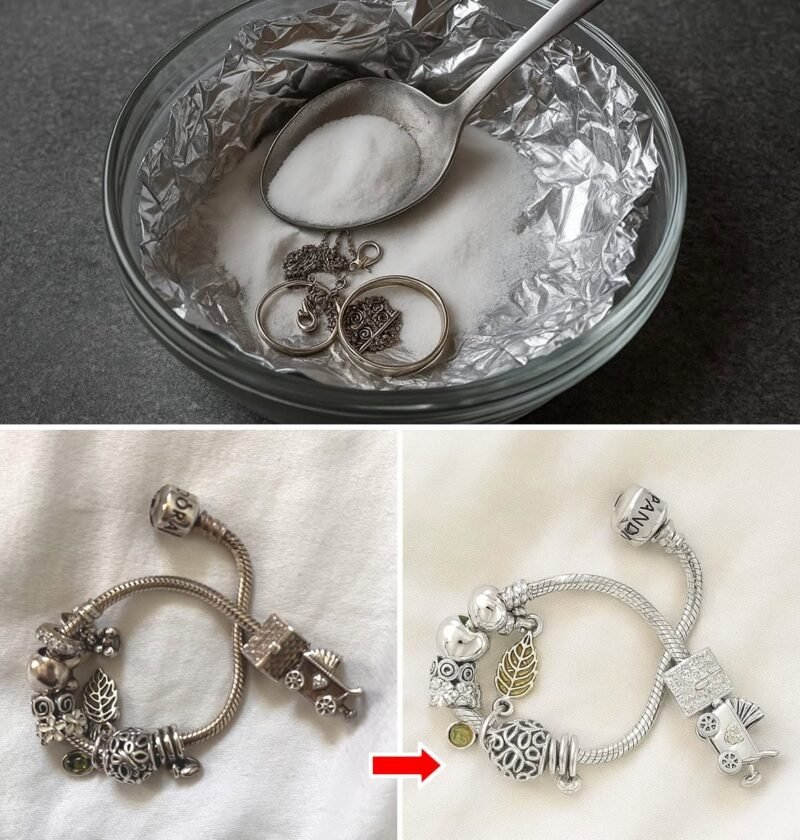
Method 1: The Aluminum Foil & Baking Soda Bath (Best for Heavy Tarnish)
This is the gold standard for cleaning silver. It uses a simple electrochemical reaction to instantly lift the tarnish off the silver and transfer it onto a piece of aluminum foil—no elbow grease required.
Warning: Do not use this method on antique silver with intentional “antiquing” (darkened details in crevices you want to keep), hollow-core pieces, or items with glued gemstones (like pearls or opals), as the hot water can loosen adhesives.
Method 2: Silver Polish Cream (Best for Fine, Detailed, or Antique Silver)
If you are dealing with expensive heirloom pieces, vintage silver with intricate engravings, or items you don’t want to submerge in hot water, a specialized commercial silver polish (such as Hagerty’s, Wizards, or Goddards) is the safest route.
-
How to use it: Apply a small amount of the cream to a soft, lint-free flannel cloth or sponge (never use rough paper towels or abrasive scrubbers, which will scratch soft silver). Gently rub the polish onto the silver using a straight back-and-forth motion—avoid circular motions, which can highlight microscopic scratches.
-
Rinse and Buff: Wash the residue off with mild dish soap and warm water, then dry and buff immediately to a brilliant shine.
Method 3: The Gentle Toothpaste Method (Best for Quick, Small Jobs)
If you don’t have baking soda or silver polish on hand, a simple non-gel white toothpaste can work in a pinch for small items like rings or flatware.
-
How to use it: Put a pea-sized amount of plain white paste (avoid whitening toothpastes with heavy silica abrasives or gel formulas) onto a soft cloth or your fingers. Gently rub it over the blackened areas.
-
Rinse Carefully: Let it sit for a minute, then rinse completely with warm water and buff dry. (Use this sparingly, as even mild toothpaste has micro-abrasives that can wear down thin silver plating over time).
How to Prevent Future Tarnish
Once you get your silver looking like new, you can keep it tarnish-free much longer by changing how you store it:
-
Keep it dry: Moisture accelerates the tarnishing process. Never store silver in humid areas like bathrooms.
-
Use anti-tarnish strips: Storing silver in a lined jewelry box or wrapping it in acid-free tissue paper or anti-tarnish flannel bags absorbs airborne sulfur before it hits the metal.
-
Avoid rubber and wool: Items like rubber bands, latex gloves, and certain wool fabrics release sulfur compounds that rapidly blacken silver.