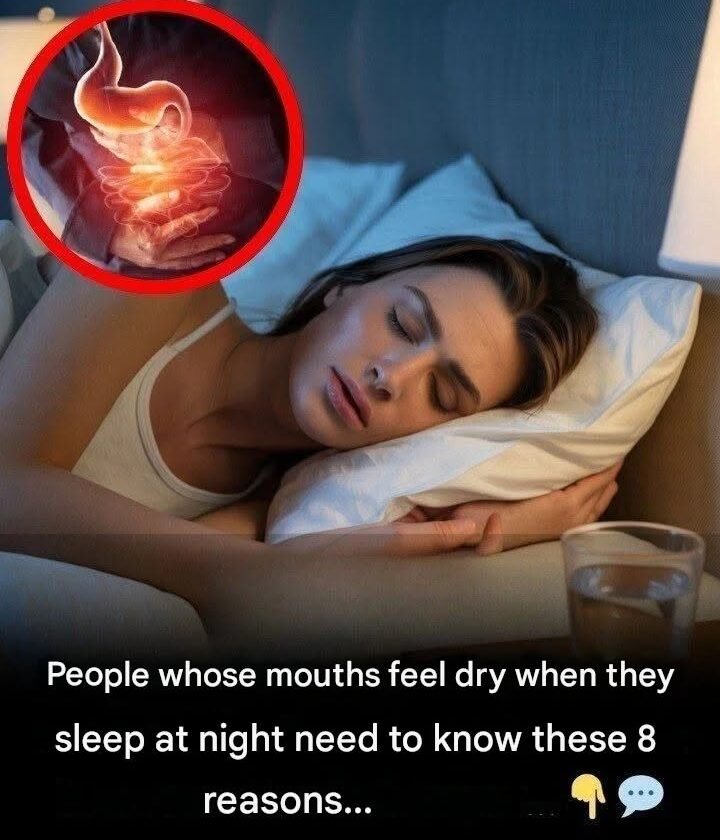
8 reasons your mouth may feel dry at night
Waking up with a dry mouth is common and often has a simple explanation. But if it happens regularly, the underlying cause is worth considering.
-
Mouth breathing — nasal congestion, allergies, or a blocked nose can make you breathe through your mouth while sleeping.
-
Snoring or sleep apnea — breathing through the mouth during sleep can cause significant morning dryness. Loud snoring, gasping, witnessed pauses in breathing, or daytime sleepiness should be evaluated.
-
Dehydration — not drinking enough fluids, heavy sweating, fever, or excessive alcohol can contribute.
-
Dry bedroom air — air conditioning, heating, or low humidity can make nighttime dryness worse.
-
Medications — many medicines can reduce saliva, including some antihistamines, antidepressants, decongestants, and blood-pressure medicines.
-
Smoking or vaping — tobacco and vaping can irritate the mouth and reduce moisture.
-
Alcohol or caffeine — particularly when consumed in large amounts, these can contribute to dryness.
-
Medical conditions affecting saliva — diabetes and some autoimmune disorders, among other conditions, can cause persistent dry mouth.
What you can try
Keep water nearby, stay adequately hydrated during the day, treat nasal congestion appropriately, avoid smoking, and consider a cool-mist humidifier if your bedroom is dry. Sugar-free gum or lozenges can stimulate saliva production.
Don’t routinely sip sugary drinks throughout the night, as reduced saliva already increases the risk of tooth decay.
If dry mouth persists for several weeks, is severe, causes difficulty swallowing/speaking, or is accompanied by frequent urination, excessive thirst, mouth sores, or significant dental problems, talk with a doctor or dentist.