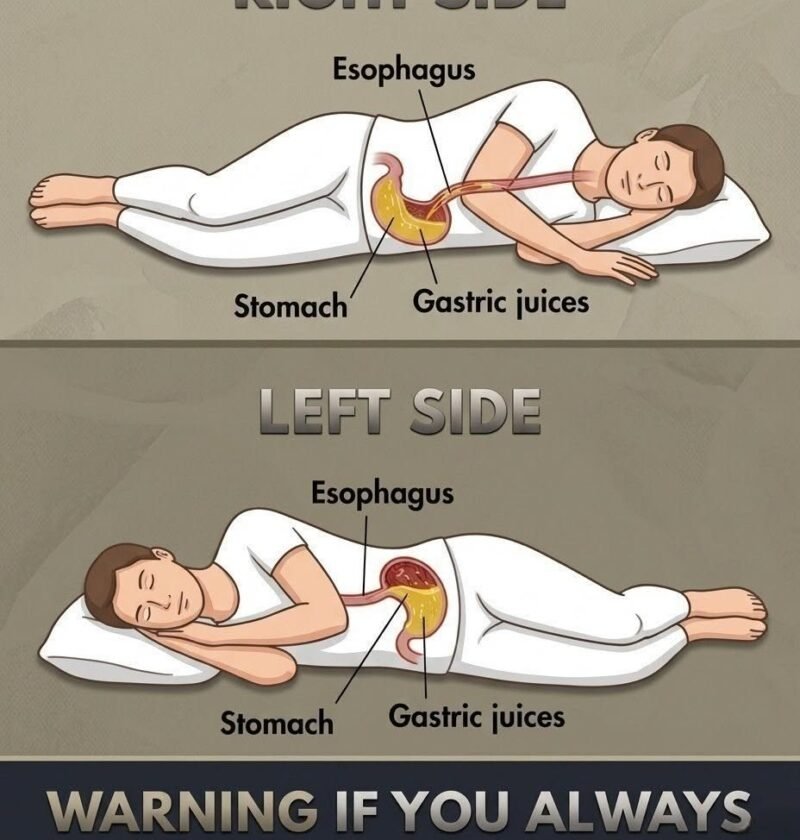
If you always sleep on your right side, viral social media posts or wellness claims often suggest you should watch out for specific health risks—most notably worse acid reflux or heartburn.
Here is what gastroenterologists and sleep specialists actually say about the impact of sleeping on your right side:
The Science Behind Right-Side Sleeping & Digestion
-
Anatomy and Gravity: Due to the physical layout of your internal organs, your stomach sits on the left side of your upper abdomen, and the junction where your esophagus connects to your stomach lies slightly below the level of gastric acid when you lie down.
-
The Reflux Effect: When you sleep on your right side, gravity and anatomy make it easier for stomach acid to wash back up into the esophagus, potentially triggering nighttime heartburn, sour tastes, or acid reflux (GERD) symptoms. Conversely, sleeping on your left side keeps the gastric junction above the level of stomach acid, allowing gravity to help keep acid contained.
Are There Any Benefits to Right-Side Sleeping?
For healthy adults without chronic acid reflux, sleeping on either side is generally safe. In fact, side sleeping overall has distinct advantages:
-
Reduces Snoring: Side sleeping keeps your airway more open compared to sleeping flat on your back, which can help minimize snoring and mild sleep apnea.
-
Heart Comfort: For healthy individuals, right-side sleeping does not strain or damage the heart. (Though pregnant individuals are often advised to sleep on their left side to optimize blood flow to the fetus, right-side sleeping is still safe and common).
What Should You Do?
If you wake up frequently with a burning throat, sour taste, or acid indigestion, shifting from your right side to your left side can provide noticeable relief. However, if you don’t experience heartburn or digestive discomfort, your natural sleeping position is entirely fine.