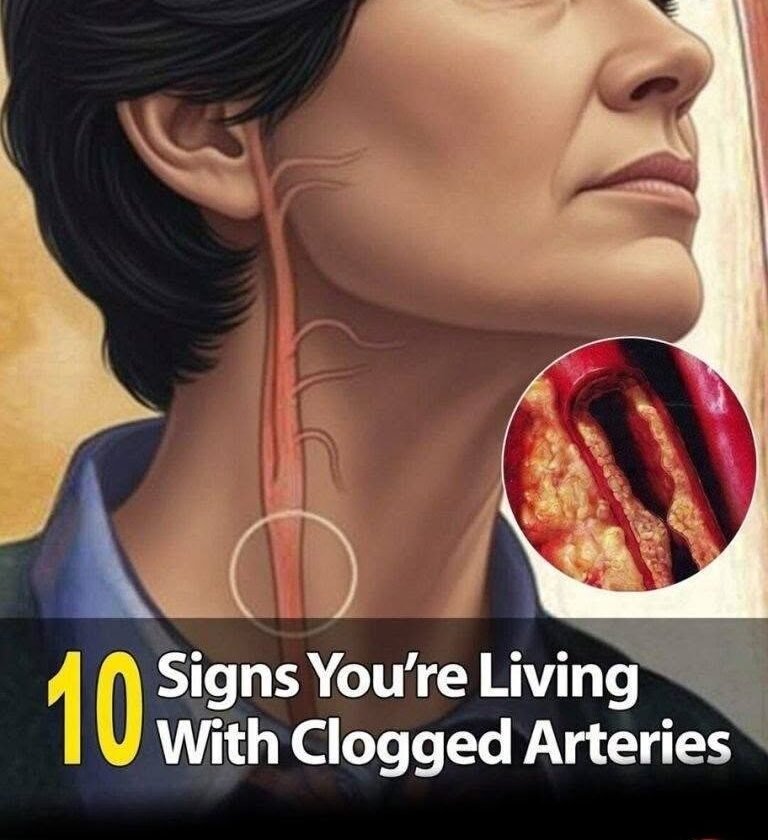
Viral health articles and social media videos love to use dramatic titles like “10 Indicators of Blocked Arteries You Shouldn’t Ignore,” often listing vague, overlapping symptoms to scare people into clicking or buying unverified supplements.
While atherosclerosis (the buildup of plaque inside your arteries) is a serious medical condition that can lead to heart attacks and strokes, the body doesn’t always broadcast mild or moderate blockages with obvious warning signs. In fact, many blocked arteries remain completely silent until a critical threshold is reached.
Cardiologists and vascular specialists emphasize that while you should never ignore persistent cardiovascular symptoms, it is important to understand what actually indicates blocked arteries versus what points to other common health issues.
Understanding Arterial Blockages (Atherosclerosis)
Arteries are blood vessels that carry oxygen-rich blood from your heart to the rest of your body. Over time, cholesterol, fat, calcium, and cellular waste can accumulate on the inner walls, forming plaque.
-
As plaque builds up, it narrows the artery and restricts blood flow.
-
The Danger: A blockage becomes life-threatening when plaque ruptures, causing a blood clot that completely cuts off blood flow to the heart muscle (heart attack) or the brain (stroke).
Real Medical Signs of Significant Arterial Blockages
When arteries become severely narrowed or blocked in specific regions of the body, they tend to produce distinct, recurring symptoms:
-
Chest Pain or Pressure (Angina):
-
What it feels like: A heavy squeezing, pressure, fullness, or pain in the center of the chest that often occurs during physical exertion or emotional stress and goes away with rest. This indicates narrowed coronary arteries struggling to supply enough blood to the heart muscle.
-
-
Exertional Shortness of Breath:
-
Feeling unusually winded during light activities (like climbing a flight of stairs) that used to be easy, because the heart cannot pump efficiently.
-
-
Intermittent Claudication (Leg Pain with Walking):
-
Cramping, aching, or tiredness in your calves, thighs, or buttocks that occurs only when walking and consistently goes away after a few minutes of rest. This is a classic sign of Peripheral Artery Disease (PAD), meaning plaque buildup in the arteries supplying your legs.
-
-
Transient Ischemic Attacks (TIAs) or Stroke-Like Symptoms:
-
Sudden weakness or numbness in the face, arm, or leg (especially on one side of the body), sudden slurred speech, or temporary vision loss in one eye. These can signal plaque buildup or a clot in the carotid arteries supplying the brain.
-
-
Erectile Dysfunction:
-
For men, recurring erectile dysfunction is often one of the earliest physical warning signs of systemic vascular disease, because the penile arteries are much smaller than coronary arteries and show plaque narrowing much sooner.
-
Symptoms Often Misattributed to Blocked Arteries
Viral posts frequently attribute completely unrelated, everyday symptoms to “blocked arteries.” Medical experts clarify that the following are not direct indicators of arterial plaque:
-
Twitching eyelids or muscle spasms: Usually caused by stress, caffeine, fatigue, or electrolyte imbalances.
-
Cold hands and feet: Often just a normal physiological response to cold temperatures, anxiety, or low body fat, rather than severe vascular blockage (unless accompanied by severe pain, skin discoloration, or non-healing sores).
-
General fatigue or brain fog: Linked to sleep deprivation, stress, nutritional deficiencies, or thyroid issues.
How Doctors Actually Evaluate Arterial Health
If you have risk factors (like high blood pressure, high cholesterol, diabetes, or a family history of heart disease) and want to check your arterial health, doctors use diagnostic tools rather than guessing from online symptom lists:
-
Lipid Panels & Blood Tests: To check cholesterol and inflammation markers.
-
Ankle-Brachial Index (ABI): A quick, non-invasive test comparing blood pressure in your ankles to your arms to check for PAD.
-
Carotid Ultrasound: Imaging to check for plaque buildup in the neck arteries.
-
Calcium Scoring (CAC Scan) or CT Angiography: Imaging scans that visualize actual calcium deposits and plaque buildup in the coronary arteries.