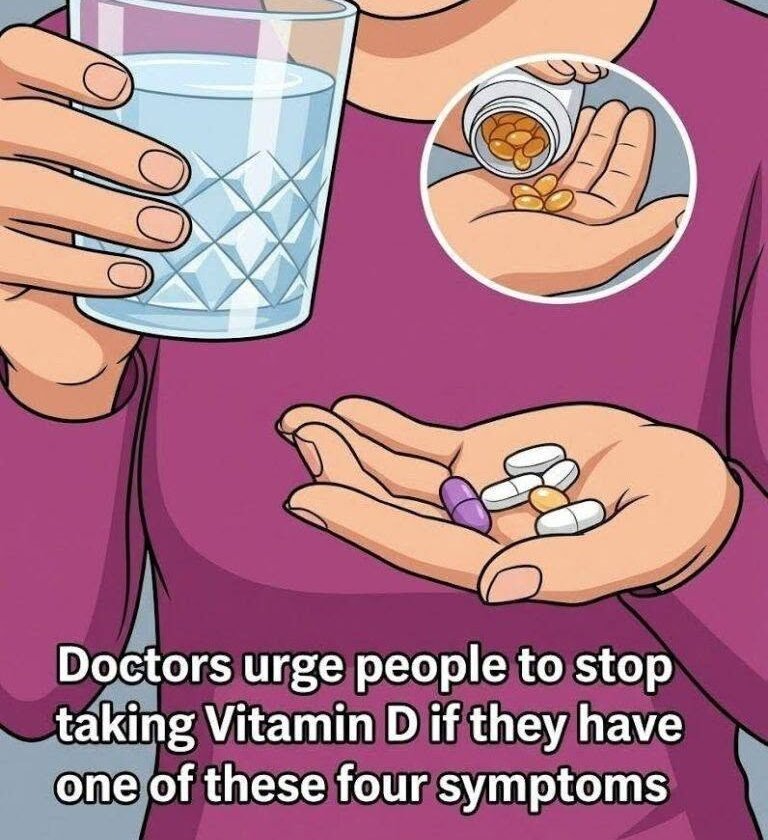
“Stop Taking Vitamin D Immediately If You Have These 4 Symptoms” — What’s actually true?
This headline is overstated. Vitamin D is important for bone health, and most people can take it safely at recommended doses. The real concern is vitamin D toxicity, which is usually caused by taking excessive amounts of supplements rather than from normal food or sunlight.
🚩 Symptoms that can occur with too much vitamin D
Excess vitamin D can cause too much calcium in the blood (hypercalcemia). Possible warning signs include:
- Nausea or vomiting
- Loss of appetite
- Muscle weakness or unusual fatigue
- Excessive thirst and frequent urination
Other symptoms can include confusion, dehydration, bone pain, and kidney stones. Severe toxicity can damage the kidneys or cause abnormal heart rhythms.
💊 How much is too much?
For most adults, 4,000 IU (100 mcg) per day is the usual upper intake limit from all sources, unless a healthcare professional has prescribed a higher dose for a specific reason. Some people are temporarily prescribed higher doses to correct a documented deficiency, with appropriate monitoring.
The recommended daily amount is generally 600 IU for adults up to age 70 and 800 IU for adults over 70.
Should you stop immediately?
If you’re taking vitamin D because your doctor prescribed it, don’t simply stop based on a social-media post. Contact your healthcare professional if you develop concerning symptoms; they can check calcium and vitamin D levels and determine whether your dose needs changing.
If you’ve accidentally taken a very large dose, contact a medical professional or poison-control service promptly rather than waiting for symptoms.