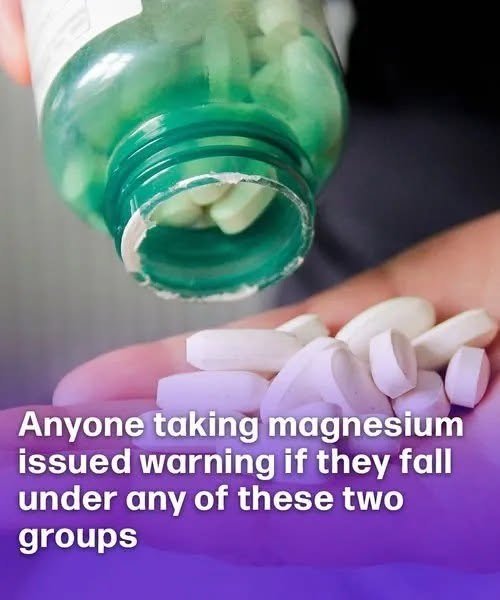
⚠️ Magnesium Supplements: Who Needs Extra Caution?
The warning has a legitimate basis, but headlines often make it sound as though magnesium supplements are dangerous for everyone. The two groups that deserve particular caution are people with impaired kidney function and people taking medications that can interact with magnesium.
1. People with kidney disease
Healthy kidneys remove excess magnesium through urine. When kidney function is significantly reduced, magnesium can accumulate, potentially causing low blood pressure, weakness, abnormal heart rhythms, breathing problems, and, in severe cases, cardiac arrest. Office of Dietary Supplements+1
This is particularly important with high-dose magnesium laxatives or antacids. People with chronic kidney disease should check with their doctor or pharmacist before taking magnesium supplements or magnesium-containing products. PubMed
2. People taking certain medications
Magnesium can interfere with the absorption or effects of several medicines. Examples include:
- Certain antibiotics — magnesium can reduce their absorption if taken too close together.
- Bisphosphonates used for osteoporosis — magnesium can interfere with absorption.
- Some diuretics — these can alter magnesium levels.
- Long-term acid-reducing medicines can themselves affect magnesium levels. Office of Dietary Supplements
A pharmacist can tell you whether your particular medicines need to be separated from magnesium and by how long.
How much is too much?
For healthy adults, the U.S. NIH sets an upper limit of 350 mg per day of magnesium from supplements and medications, not including magnesium naturally present in food. Higher doses may be appropriate in specific medical situations under professional supervision. Office of Dietary Supplements
High supplemental doses commonly cause diarrhea, nausea, and abdominal cramping; very large amounts can be dangerous. Office of Dietary Supplements
Bottom line: Magnesium from normal foods is generally safe. The bigger concern is high-dose supplementation, particularly if you have kidney problems or take interacting medicines. Don’t stop a prescribed medicine or start a supplement solely because of a viral health headline—have your pharmacist review the exact product and dose. fda.gov
Sources