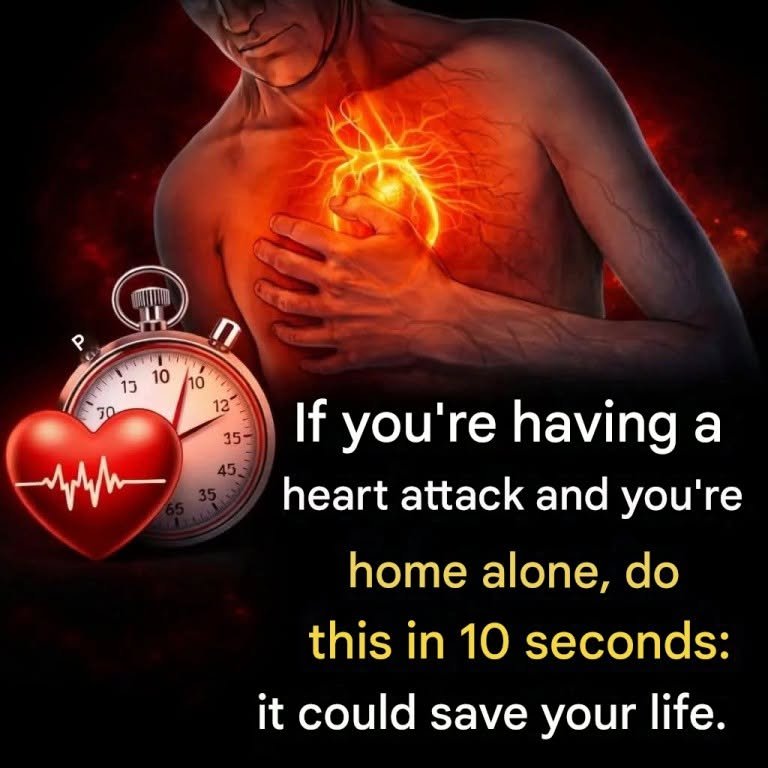
The viral claim suggesting you can perform a specific trick (such as forceful coughing, known as “cough CPR”) within 10 seconds to stop a heart attack at home is a dangerous medical myth.
Major medical organizations, including the American Heart Association (AHA), explicitly state that “cough CPR” does not work for a heart attack and is not a substitute for emergency care. A heart attack is a plumbing issue (a blocked coronary artery), and coughing cannot clear that blockage or restart a heart.
If you or someone else is experiencing actual symptoms of a heart attack (such as chest pressure, shortness of breath, pain radiating to the arm or jaw, or sudden cold sweats), do not waste precious seconds trying unproven social media tricks.
Instead, take these proven, life-saving steps immediately:
What to Do in the First Minutes of a Heart Attack
-
1. Call Emergency Services Immediately: Dial your local emergency number (such as 911) right away. Time is critical; professional medical responders can begin life-saving treatment the moment they arrive.
-
2. Sit Down and Rest: Stop whatever you are doing and sit or lie down in a comfortable position. Staying calm and minimizing physical movement reduces the heart’s demand for oxygen.
-
3. Take Aspirin (If Safe): If you are conscious, not allergic to aspirin, and have no history of severe bleeding disorders, chew and swallow a regular adult aspirin (typically 300 mg). Chewing allows it to enter the bloodstream faster to help slow down blood clotting.
-
4. Use Prescribed Medication Only: If you have been previously diagnosed with heart conditions and have a prescription for nitroglycerin, take it as directed by your doctor. Do not take anyone else’s medication.
-
5. Be Prepared for CPR: If the person loses consciousness and stops breathing normally, bystander intervention is vital. Start Hands-Only CPR (push hard and fast in the center of the chest at a rate of 100 to 120 beats per minute) until emergency help or an AED arrives.