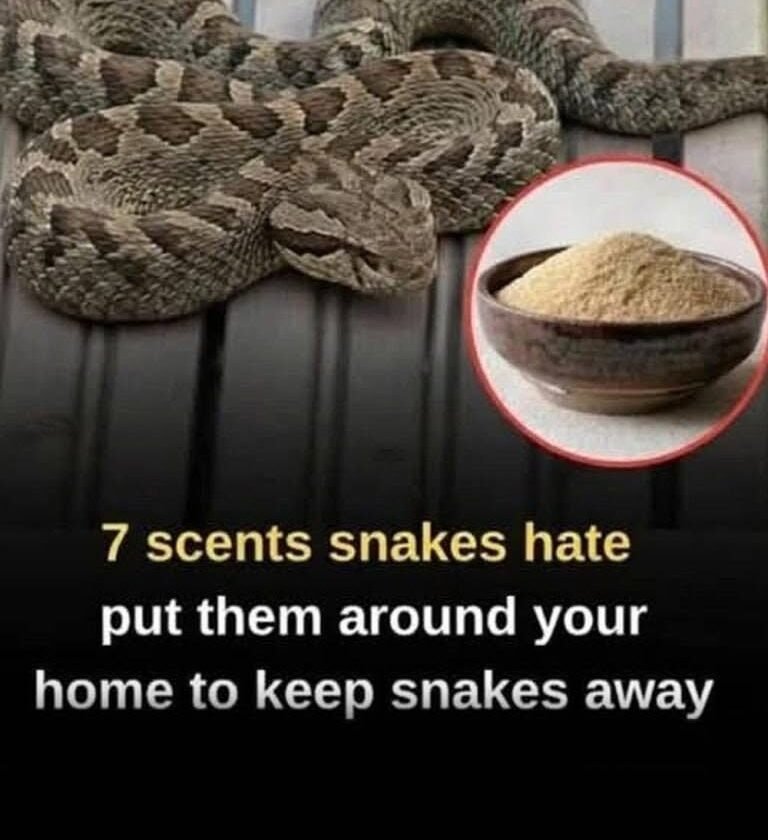
While snakes “smell” their environment differently than humans—using their forked tongues to flick scent particles into an organ on the roof of their mouth (the Jacobson’s organ)—they are intensely sensitive to strong, pungent, and volatile oils.
If you are looking to create a natural, chemical-free perimeter around your home, here are 7 smells snakes strongly dislike, along with practical ways to use them.
1. Cinnamon and Clove Oil
-
Why they hate it: Both oils contain powerful active compounds (like cinnamaldehyde and eugenol) that are intensely overwhelming and irritating to a snake’s sensitive olfactory system.
-
How to use it: Mix 20 to 30 drops of cinnamon and clove essential oils with water and a tiny drop of dish soap (as an emulsifier) in a spray bottle. Spray this mixture heavily around potential entry points, foundation cracks, and dark corners of a garage or shed.
2. Peppermint Oil
-
Why it hates it: The sharp, cooling, and minty aroma of menthol is universally disliked by many pests and reptiles.
-
How to use it: Soak cotton balls in pure peppermint oil and tuck them into window wells, crawl spaces, gaps under doors, or around the perimeter of your patio. You will need to refresh or re-soak the cotton balls every couple of weeks, especially after it rains.
3. Garlic and Onions
-
Why they hate it: Garlic and onions belong to the allium family and release strong sulfonic acids. The lingering, sulfurous odor confuses a snake’s ability to track scents and hunt.
-
How to use it: Crush fresh cloves of garlic or chop onions and scatter them around the outer perimeter of your yard. Alternatively, you can puree them with water, strain the liquid, and use it as a perimeter spray for your garden beds. Planting ornamental alliums or borders of garlic around your yard also offers a mild, living deterrent.
4. Cedarwood Oil and Cedar Mulch
-
Why they hate it: Cedar contains natural aromatic hydrocarbons that many reptiles find deeply unpleasant.
-
How to use it: Swap out traditional wood chip landscaping for cedar mulch in flower beds close to your house foundation. You can also boost its effectiveness by splashing cedarwood essential oil directly onto the mulch to keep the scent potent.
5. Lemongrass and Citronella
-
Why they hate it: While humans often find citrus and grassy notes refreshing, the heavy, pungent oils in lemongrass and citronella act as natural sensory irritants to snakes.
-
How to use it: Plant live lemongrass strategically around high-traffic zones like patios, porches, or walkways. You can also use citronella or lemongrass essential oils mixed with water to wipe down outdoor furniture bases or perimeter fences.
6. White Vinegar
-
Why it hates it: Vinegar has a sharp, highly acidic odor. Snakes dislike slithering over or near acidic substances because it irritates their skin and scales.
-
How to use it: Pour undiluted white vinegar directly around the perimeter of water features, swimming pools, or garden ponds (places snakes love to visit for moisture and prey). Avoid pouring it directly on lawn grass or plants, as high acidity can damage vegetation.
7. Sulfur-Based Mixes (or Epsom Salt Blends)
-
Why they hate it: Traditional granular snake repellents heavily rely on sulfur and strong mineral salts. They create an intensely uncomfortable tactile and olfactory barrier.
-
How to use it: Combine Epsom salts with a few drops of cinnamon or clove oil and broadcast the mixture along your property line. The textured salt makes slithering physically uncomfortable, while the oils compound the scent deterrent.
A Quick Tip on Long-Term Prevention
Scents are great for temporary deterrence, but snakes ultimately look for shelter (tall grass, woodpiles, rock crevices) and food (rodents, mice). The most effective way to keep them away permanently is to clear tall brush away from your home’s foundation, seal up ground-level cracks, and keep rodent populations under control.
Are you trying to deter snakes from a specific area around your yard or home?