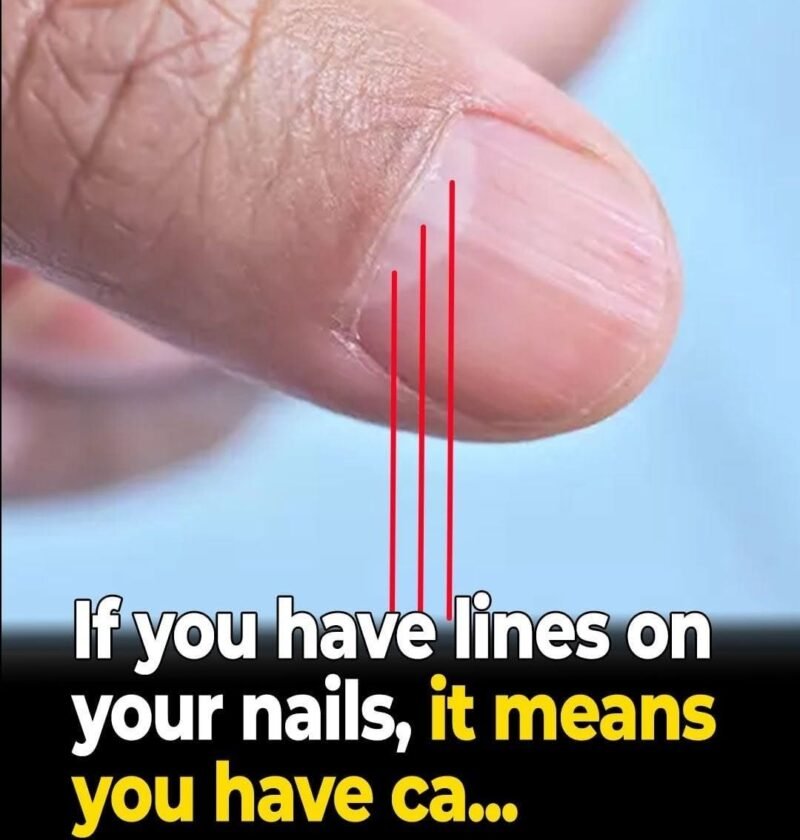
The headline “Doctor Uncovers A Telltale Sign In Your Fingernails That May Predict Your Life Expectancy” is textbook clickbait designed to exploit health anxiety. It usually pairs a dramatic thumbnail of discolored, ridged, or clubbed fingernails with a dark warning that a simple glance at your hands can predict your exact expiration date.
While it is true that your fingernails can offer subtle clues about your overall systemic health, they are not a crystal ball for your lifespan. In clinical medicine, nail changes are simply external biomarkers—visible clues that can point toward underlying nutritional deficiencies, dermatological conditions, or chronic organ strain.
Let’s separate sensationalized internet myths from what your fingernails actually reveal about your physiological health.
What Your Fingernails Can (and Can’t) Tell You
Your nails are made of keratin and are fed by a dense network of tiny blood vessels beneath the nail bed. Because nail growth relies on a steady supply of nutrients and oxygen, systemic stress or chronic illness can disrupt their formation, leaving visible physical shifts:
-
Clubbing (A Real Cardiovascular and Respiratory Clue): If your fingertips widen and round out, and your nail beds angle downward like the back of a spoon, this is known as clubbing. Clinically, clubbing is associated with chronic low blood oxygen levels, often linked to advanced pulmonary conditions (like COPD or lung cancer) or severe cardiovascular disease. It is a sign that warrants a medical evaluation—not because the nails themselves shorten your life, but because they reflect an underlying systemic disease.
-
Terry’s Nails or Muehrcke’s Lines (Metabolic and Organ Clues): Nails that turn mostly white with a narrow pink band at the tip (Terry’s nails) or display pale horizontal white lines can sometimes point toward chronic systemic conditions like cirrhosis, chronic kidney disease, or severe congestive heart failure.
-
Pitting or Splinter Hemorrhages (Dermatological or Vascular Clues): Tiny dents in the nail surface (pitting) are frequently seen in autoimmune conditions like psoriasis or alopecia areata. Tiny, dark reddish-brown vertical lines under the nails (splinter hemorrhages) can result from minor physical trauma, but in rare cases, they can signal cardiovascular inflammation like endocarditis.
Busted: The “Normal Aging” Nail Myths
Clickbait articles often prey on harmless, normal variations in nail anatomy to scare readers:
-
Vertical Ridges: Most people develop faint vertical lines running from cuticle to tip as they age. This is completely benign—akin to wrinkles on the skin—and has nothing to do with failing health or shortened life expectancy.
-
White Spots (Leukonychia): Finding a random white spot on your fingernail does not mean you have a calcium deficiency or a hidden illness; it is almost always the result of minor, forgotten trauma to the nail matrix.
The Takeaway
Your fingernails cannot predict your lifespan, but they are a fascinating window into your immediate physiological health. While minor ridges and spots are completely normal, sudden, dramatic changes—like clubbing, persistent discoloration, or severe nail separation—are worth bringing up with your physician as part of a routine clinical checkup.