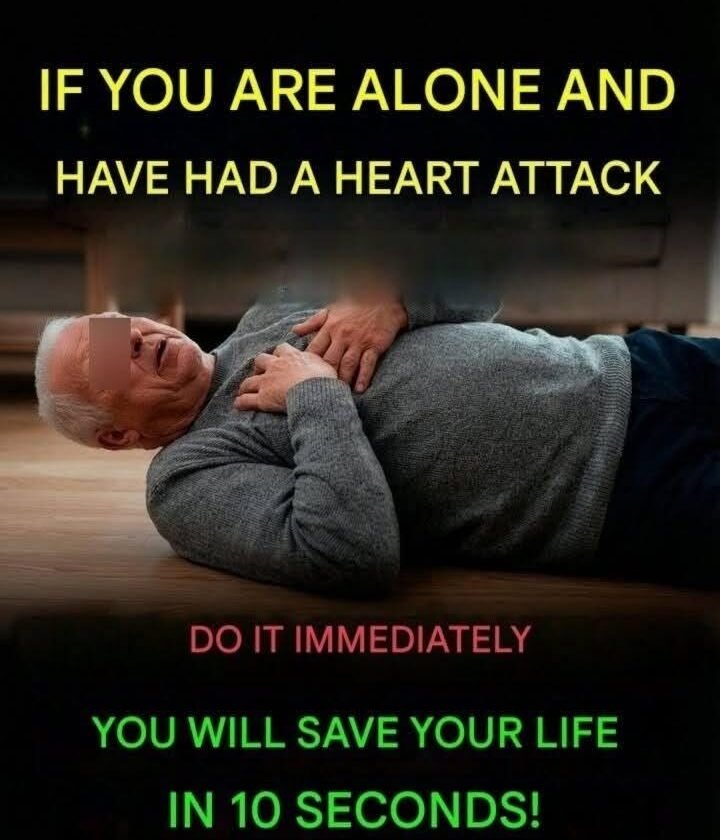
The headline “If You’re Alone During a Heart Attack, These Immediate Steps Could Save Your Life” is a staple of viral panic that has circulated online for years. It usually features a terrifying, dramatized scenario—you are home by yourself, clutching your chest, and forced to rely on a bizarre series of home remedies to survive.
For a long time, the most famous internet myth attached to this headline was the “Cough CPR” hoax—an online rumor claiming that if you cough forcefully and repeatedly during a heart attack, it will squeeze your heart and keep you alive until help arrives.
In clinical cardiology, that internet myth is not only false; it is potentially dangerous. Let’s debunk the viral myths and look at what you should actually do if you suspect you are having a heart attack while alone.
Busted: The “Cough CPR” Internet Myth
Where did the coughing myth come from? In specialized hospital settings like a cardiac catheterization lab, doctors occasionally instruct a fully conscious patient whose heart rhythm temporarily dips during a specific procedure to cough briefly to maintain blood pressure for a few seconds.
However, this does not work during an actual acute heart attack at home.
-
Coughing takes precious energy, increases stress on your cardiovascular system, delays calling for emergency help, and will not restart a fibrillating heart or open a blocked coronary artery.
What You Should Actually Do If You Are Alone During a Heart Attack
When an acute myocardial infarction (heart attack) strikes, seconds matter. If you are alone, your primary goal is to get professional medical help activated immediately while conserving your heart’s energy.
Cardiologists and emergency medical services recommend these proven steps:
1. Call 911 (or Your Local Emergency Number) Immediately
-
Why it’s the priority: Do not call a family member, do not text a friend, and do not try to drive yourself to the hospital. Call emergency services right away. Paramedics begin life-saving cardiac monitoring and treatment the moment they arrive, and they can transmit your EKG directly to the hospital while en route. Keep your phone line open if possible.
2. Unlock Your Front Door
-
Why it’s crucial: If you live alone or feel your strength fading, unlock your front door immediately after calling for help. If you collapse or lose consciousness, emergency responders won’t have to waste precious minutes breaking down your door to reach you.
3. Chew an Aspirin (If You Aren’t Allergic)
-
Why it helps: If you have plain aspirin on hand and are not allergic or told by a doctor to avoid it, chew and swallow one adult aspirin (325 mg). Aspirin is an antiplatelet agent that helps prevent blood platelets from clumping together, which can slow down the growth of the blood clot blocking your coronary artery.
4. Sit Down, Rest, and Stay Calm
-
Why it matters: Sit on the floor or in a comfortable chair immediately. Do not try to walk around, finish chores, or “walk off” the pain. Straining your body increases your heart’s demand for oxygen when it is already starved for blood flow. Try to take slow, steady breaths while you wait for help to arrive.
Recognizing the Real Signs of a Heart Attack
Knowing the actual symptoms helps you act decisively without second-guessing. A heart attack doesn’t always look like a dramatic Hollywood movie collapse. Common signs include:
-
Chest discomfort: Pressure, squeezing, fullness, or aching in the center or left side of the chest that lasts more than a few minutes or goes away and comes back.
-
Referred pain: Discomfort radiating to one or both arms, the back, neck, jaw, or stomach.
-
Associated distress: Sudden shortness of breath, breaking out in a cold sweat, lightheadedness, or sudden nausea.
The Takeaway
If you are ever alone and suspect a heart attack, skip the viral internet tricks like aggressive coughing or obscure home remedies. Unlock your door, call emergency services, chew an aspirin, and sit down to wait for professional medical help.