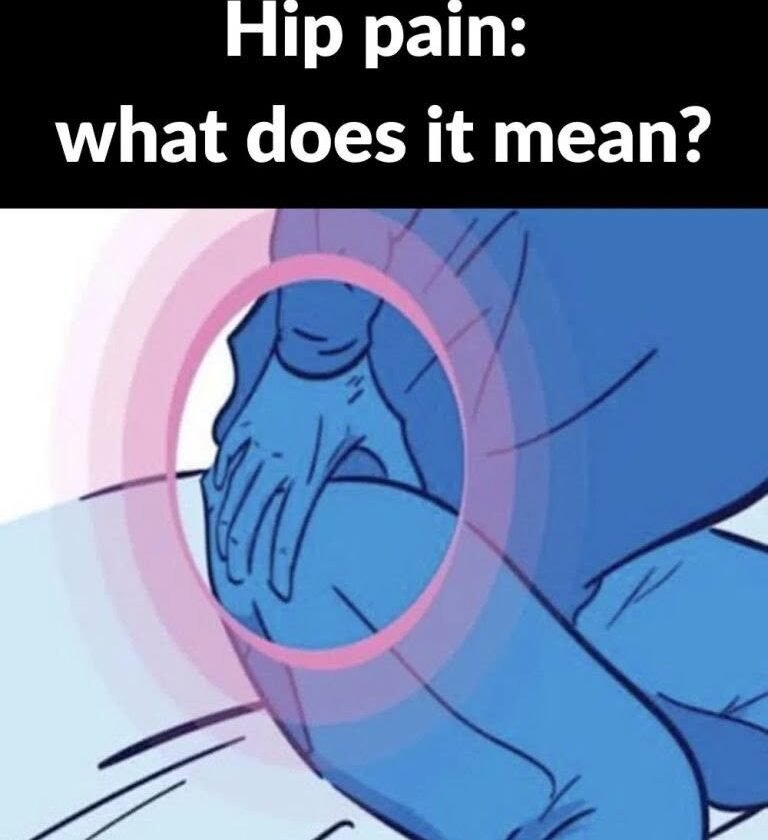
🦴 Hip Pain: What Could It Mean?
Hip pain can come from the hip joint itself, surrounding muscles and tendons, or even the lower back. The location and what triggers the pain can provide clues. (nhs.uk)
Common causes
- Arthritis: Pain and stiffness, often worse with walking or after activity, particularly with osteoarthritis.
- Muscle or tendon strain: Often follows exercise, repetitive activity or an awkward movement.
- Bursitis: Pain on the outer hip, sometimes worse when lying on that side.
- Nerve or back problems: Pain can travel from the lower back or buttock into the hip and leg.
- Injury or fracture: Especially after a fall; risk is higher with osteoporosis. (Mayo Clinic)
- Joint inflammation or infection: A hot, swollen hip accompanied by fever or feeling unwell needs urgent assessment. (nhs.uk)
📍 Where you feel it matters
Groin/inside of the hip: more suggestive of a problem within the hip joint.
Outer hip/upper thigh: more commonly involves muscles, tendons or bursae.
Buttock or pain extending down the leg: may sometimes originate from the lower back rather than the hip. (Mayo Clinic)
🚨 Get urgent medical attention if
You have severe pain after a fall, cannot put weight on the leg, the hip looks deformed, or you develop sudden severe pain or swelling. A hot, swollen hip with fever or chills can indicate a joint infection and also needs urgent care. (nhs.uk)
For mild pain without these warning signs, reducing activities that aggravate it, using an ice pack for up to 20 minutes at a time, and maintaining gentle movement may help. (nhs.uk)
Bottom line: Hip pain doesn’t automatically mean arthritis or a serious disease. The location, duration, triggers and accompanying symptoms are important for figuring out the likely cause.