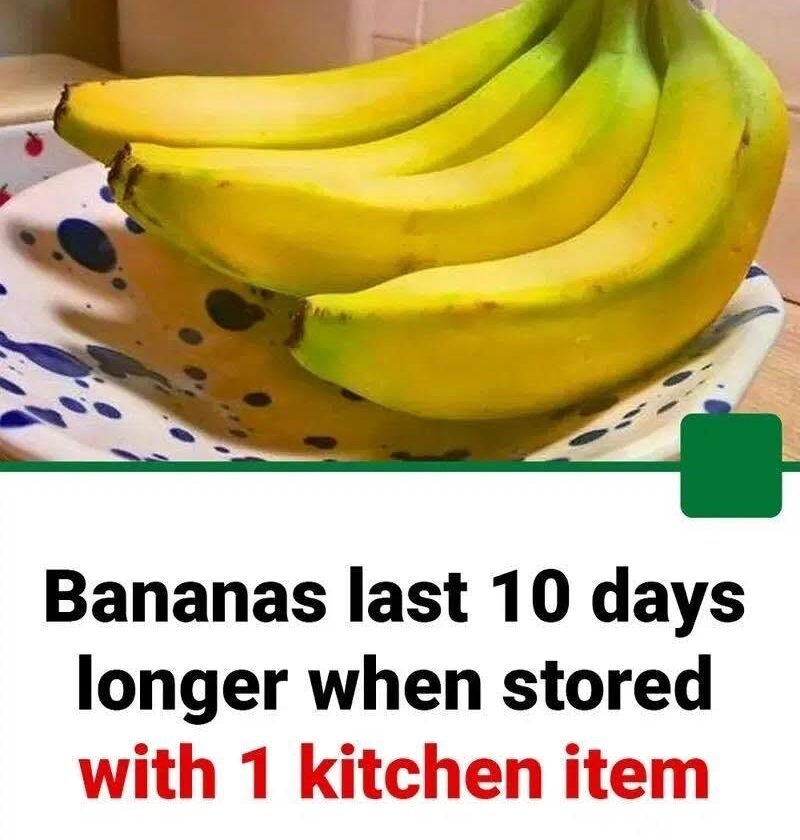
The kitchen item is cling film (plastic wrap) (or alternatively, aluminum foil) used to wrap the stems of the bananas.
Why This Trick Works
-
The Ethylene Gas Factor: Bananas naturally release a high amount of ethylene gas, which is the plant hormone responsible for ripening. Most of this gas escapes directly through the crown or stem of the bunch.
-
The Problem with the Fruit Bowl: When you toss bananas into a crowded fruit bowl, not only do they trap their own escaping gas, but they also expose other ethylene-sensitive fruits (like apples, avocados, or citrus) to the gas—triggering a rapid chain reaction of over-ripening and rotting for everything in the bowl.
-
The Seal: By wrapping the stems tightly with plastic wrap or foil, you trap the ethylene gas at the source, drastically slowing down the ripening process. Keeping them out of a central fruit bowl and resting them solo on the counter further prevents heat and gas buildup.
How to Do It for Maximum Shelf Life:
-
Separate the bunch (optional): For even longer results, some people cut the bananas apart and wrap each individual stem, though keeping them in a tightly wrapped bunch still works wonders.
-
Wrap tightly: Take a small piece of cling film and wrap it securely around the stems/crown. Make sure there isn’t a huge gap for the gas to leak out.
-
Store smart: Keep them away from direct sunlight, heat sources, and other fruits.
(Bonus tip: Once your bananas reach your preferred ripeness, you can move them into the refrigerator. Even though the peels will turn completely black in the cold, the fruit inside will stay firm and fresh for several more days!)