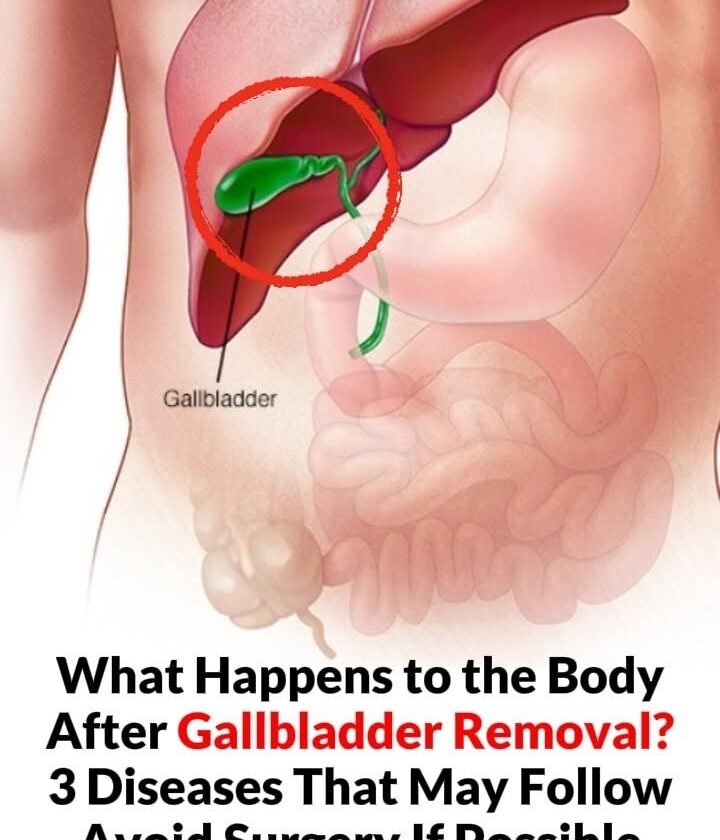
After Gallbladder Removal: 3 Possible Problems — and Why Surgery Isn’t Always Avoidable
The claim that people should “avoid gallbladder removal whenever possible” is misleading. Gallbladder removal (cholecystectomy) is generally considered a safe procedure, and when gallstones are causing repeated pain, inflammation, infection, or bile-duct obstruction, surgery may prevent serious complications. People can live normally without a gallbladder. nhs.uk+2
That said, some people do develop symptoms after surgery.
1. Diarrhea or more frequent bowel movements
Because the gallbladder normally stores bile, bile flows more continuously into the intestine after removal. Some people consequently develop softer or more frequent stools, sometimes called bile-acid diarrhea. It can often be managed with dietary changes or medication. NIDDK+1
2. Persistent abdominal symptoms
Some people continue to experience abdominal pain, indigestion, bloating, nausea, or reflux after surgery. This is sometimes referred to as post-cholecystectomy syndrome. Importantly, persistent symptoms don’t necessarily mean the surgery itself caused the problem; another digestive condition or a stone remaining in the bile duct may be responsible. nhs.uk+1
3. Surgical complications
Like any operation, cholecystectomy carries risks, including infection, bleeding, blood clots, bile leakage, retained gallstones, and injury to the bile ducts or nearby organs. Serious complications are uncommon, but the individual risk depends partly on overall health and the circumstances of the surgery. nhs.uk+1
So, should you avoid surgery?
Not automatically. If you have gallstones that cause no symptoms, surgery may not be necessary in many cases. But symptomatic or complicated gallbladder disease can make removal the appropriate treatment. For example, acute cholecystitis can lead to serious complications such as tissue death, perforation, or infection if inadequately treated. nhs.uk+1
The sensible approach is to discuss your diagnosis, symptoms, ultrasound findings, and alternatives with a surgeon, rather than avoiding surgery solely because of stories about possible side effects.
If you’re considering gallbladder surgery, I can also explain when surgery is actually necessary, when it can safely be avoided, and what alternatives exist .