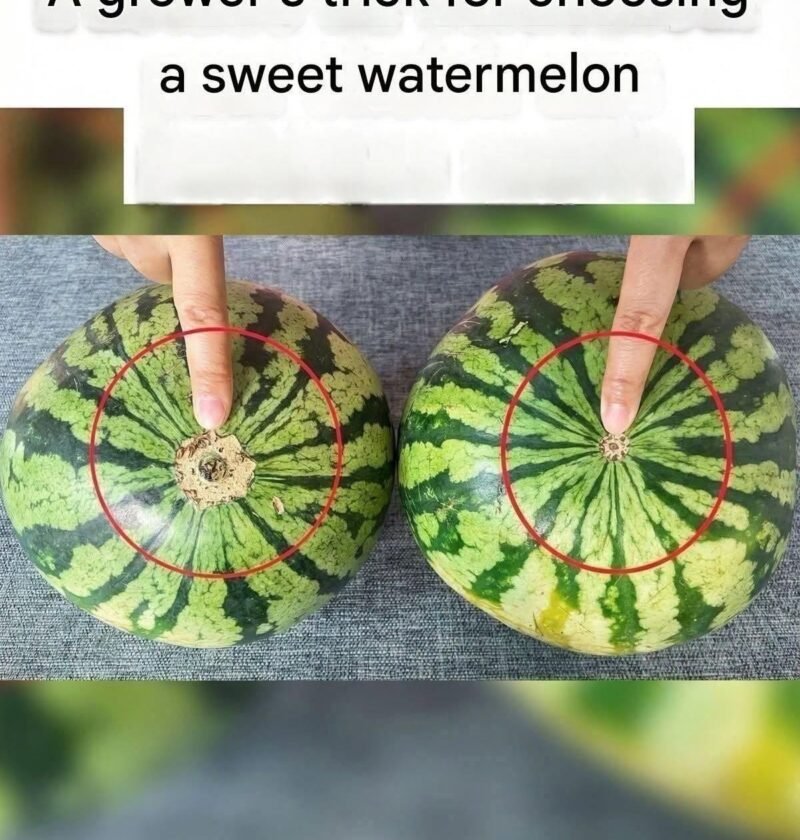
How to Pick a Sweet, Juicy Watermelon
There isn’t a 100% foolproof visual test—even growers say no single outside characteristic guarantees sweetness. But using several clues together can greatly improve your chances.
👀 Look for these 5 signs
1. Find the yellow “field spot” 🟡
Turn the watermelon over and look for the patch where it rested on the ground. A large creamy-yellow to yellow-orange spot is generally a good sign. A white or very pale spot can indicate that it was harvested too early.
2. Choose the heavier one ⚖️
Pick up several similarly sized melons. Choose the one that feels heavier for its size—watermelon is about 92% water, so greater weight generally means a juicy melon.
3. Look for a dull, firm rind 🌿
A ripe watermelon tends to have a duller rather than glossy appearance. Avoid fruit with soft spots, cuts, bruises or dents.
4. Try the thump test 👋
Give the underside a gentle tap. A ripe melon often produces a deep, resonant sound. But don’t rely on this alone—experts disagree about how reliable sound is compared with other indicators.
5. If the stem/tendril is visible, check it 🌱
For melons still showing their vine connection, a brown, dry tendril is a useful sign of maturity; a green, actively growing tendril suggests the fruit may not have been fully mature when picked.
⭐ My quick supermarket checklist
Large yellow field spot + heavy for its size + dull green rind + firm surface = a good bet.
And one important fact: watermelon doesn’t become sweeter after it’s harvested, so choosing a melon that was mature when picked matters much more than trying to “ripen” it at home