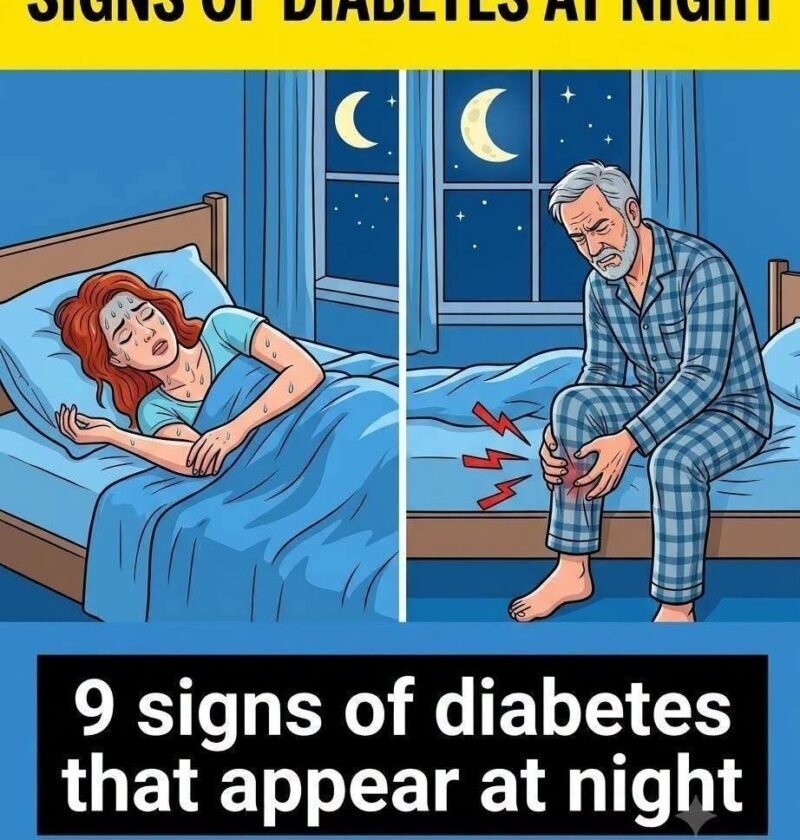
The headline “9 diabetes symptoms that appear at night” is somewhat misleading. Diabetes does not have a special set of nine symptoms that occur only at night. However, high blood sugar can produce symptoms that are particularly noticeable overnight, especially increased urination and thirst. Many people with type 2 diabetes have few or no symptoms at all. (CDC)
🌙 Symptoms you might notice at night
- Waking up repeatedly to urinate — frequent urination is a common diabetes symptom and can occur at night. (CDC)
- Excessive thirst or a very dry mouth — high blood glucose can cause increased thirst. (NIDDK)
- Nighttime hunger — increased hunger can occur with diabetes.
- Night sweats, shakiness or a racing heart — in someone already taking insulin or certain diabetes medicines, these can be signs of low blood sugar, rather than undiagnosed diabetes. (CDC)
- Restless or disrupted sleep — frequent urination, thirst, or glucose fluctuations can interfere with sleep.
- Fatigue during the day after poor sleep — fatigue itself is a recognized diabetes symptom, although it has many other causes. (CDC)
- Blurred vision — high blood glucose can cause temporary vision changes. (NIDDK)
- Tingling or numbness in the feet — nerve problems associated with diabetes can produce these sensations. (CDC)
- Slow-healing cuts or recurrent infections — these are recognized diabetes-related warning signs, although they aren’t specifically nighttime symptoms. (CDC)
🩸 Don’t diagnose diabetes from symptoms alone
The most reliable way to find out is blood-glucose testing. Type 2 diabetes can develop gradually and may cause no noticeable symptoms, so people at increased risk may benefit from screening even when they feel well. (NIDDK)
Important: If someone has extreme thirst and urination together with vomiting, abdominal pain, deep/rapid breathing, fruity-smelling breath, or severe weakness/confusion, particularly with suspected type 1 diabetes, urgent medical attention is needed because these can be signs of diabetic ketoacidosis (DKA). (CDC)
Bottom line: Waking several times at night to urinate—especially together with unusual thirst, unexplained weight loss, fatigue, or blurred vision—is worth discussing with a healthcare professional, but it doesn’t automatically mean diabetes.