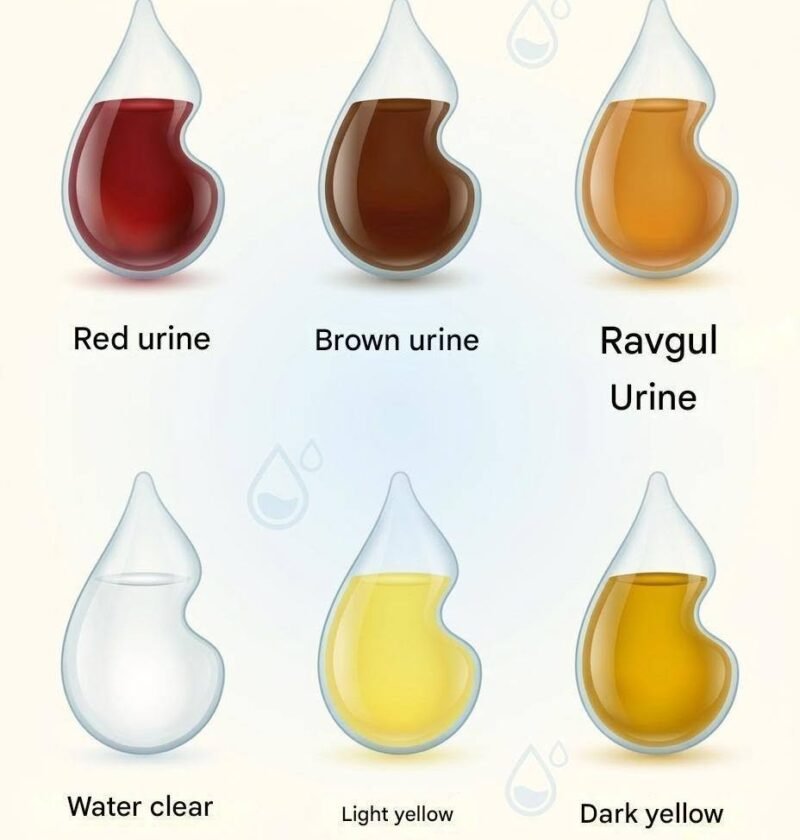
Urine color can provide clues, but it can’t diagnose a condition by itself. Hydration, foods, medicines, and supplements can all change urine color.
💧 What different colors can mean
-
Pale yellow: Usually a sign of good hydration.
-
Dark yellow/amber: Often means you’re dehydrated; drinking more water may lighten it.
-
Completely clear: You may be drinking more fluid than you need. Persistently excessive thirst and very frequent clear urine deserve medical evaluation.
-
Pink or red: Can come from beets or certain medicines, but it can also indicate blood in the urine. If you can’t clearly explain the color from something you ate or took, get it checked.
-
Orange: May result from dehydration or certain medications, but orange urine with yellow skin/eyes can indicate a liver or bile problem.
-
Brown or cola-colored: Can occur with severe dehydration, certain medications, muscle injury, or liver problems and should be medically evaluated, especially if persistent.
-
Blue or green: Uncommon; can result from certain medications, dyes, or occasionally infections.
-
Cloudy or milky: Sometimes associated with dehydration, crystals, urinary infection, or other urinary-tract problems.
🚨 When to get checked
Seek medical advice for persistent blood-colored, brown, or cloudy urine, particularly if accompanied by pain, fever, burning during urination, back/flank pain, or reduced urine output.
If urine suddenly becomes dark brown along with yellow eyes/skin, severe weakness, or very little urine, seek prompt medical attention.
One useful rule: don’t try to force your urine to be completely clear. For most healthy adults, pale yellow is a reasonable target.