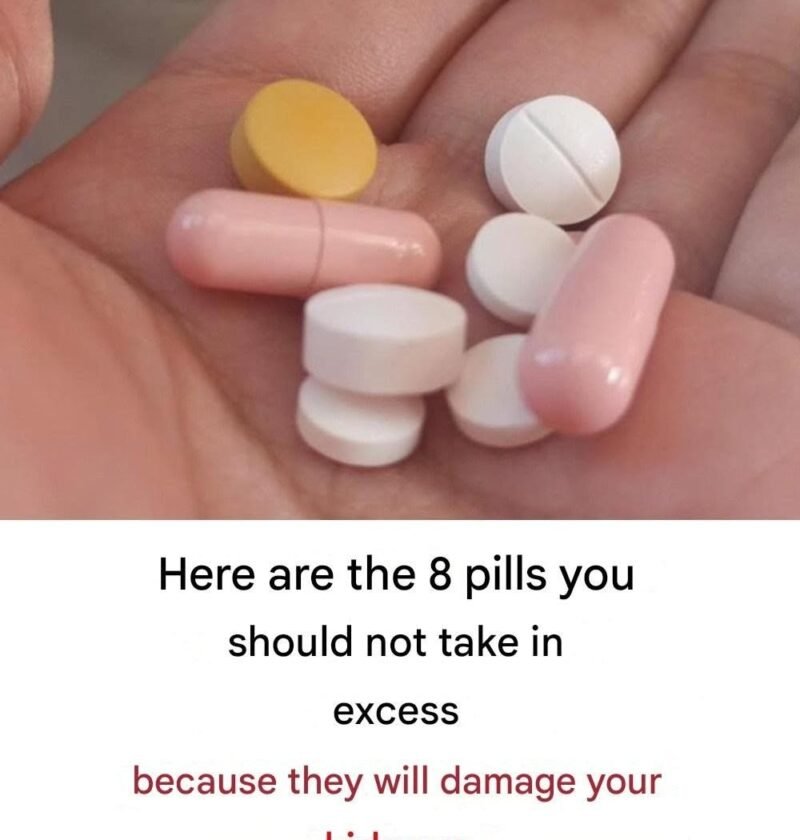
The headline “8 pills you shouldn’t take because they damage your kidneys” is too broad. Most medicines are safe when appropriately prescribed and dosed, but certain drugs can cause kidney injury—especially at high doses, during dehydration, or in people who already have kidney disease.
Eight important examples/categories are:
-
Ibuprofen and other NSAIDs — including naproxen and diclofenac. Long-term or high-dose use can reduce kidney blood flow and cause kidney injury.
-
High-dose aspirin — ordinary low-dose aspirin prescribed for cardiovascular protection is a different situation; don’t stop it without medical advice.
-
Certain antibiotics — some, including aminoglycosides, can be nephrotoxic and generally require medical monitoring.
-
Vancomycin — an antibiotic that can affect kidney function, particularly at higher exposures or when combined with other nephrotoxic medicines.
-
Some antiviral medicines — certain drugs can cause kidney problems and may require dose adjustment.
-
Lithium — long-term treatment can affect kidney function and requires monitoring.
-
Certain chemotherapy drugs — some can directly injure the kidneys, so kidney function is monitored during treatment.
-
Some proton-pump inhibitors (PPIs) — medicines such as omeprazole have been associated with certain kidney problems, although serious injury is uncommon.
The bigger risk isn’t simply “taking a pill”
Kidney injury becomes more likely with dehydration, older age, pre-existing kidney disease, heart failure, or combinations of medicines that affect kidney function.
Don’t stop a prescribed medication because you’ve read that it can affect the kidneys. Your doctor may have selected it because its benefits outweigh the risks and may monitor your creatinine/eGFR and electrolytes.
If you give me the names of the medicines you take, I can tell you which ones are potentially hard on the kidneys and what precautions are relevant.