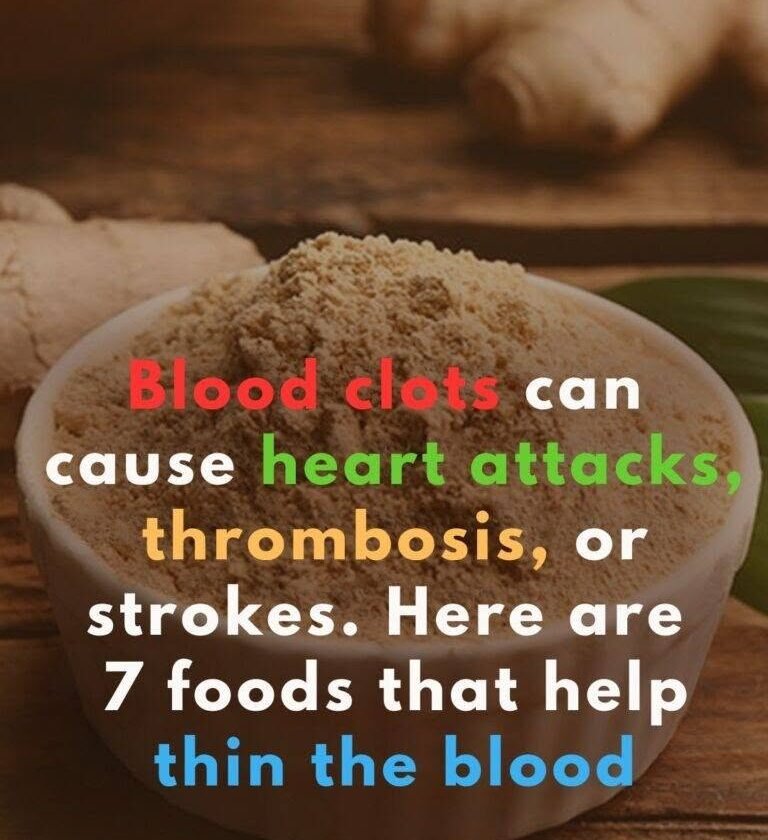
If by “blood-thinning foods” you mean foods that may modestly affect blood clotting, there are several commonly discussed options—but none works like a prescribed blood thinner.
-
Garlic — compounds in garlic may have antiplatelet effects.
-
Ginger — laboratory and limited human evidence suggests it may affect platelet activity.
-
Turmeric — curcumin has antiplatelet effects in experimental research.
-
Fatty fish such as salmon and sardines — their omega-3 fats can have modest effects on platelet function.
-
Foods rich in vitamin E, such as almonds and sunflower seeds — high supplemental doses are more relevant to bleeding risk than normal food portions.
-
Cranberries — evidence for a clinically meaningful blood-thinning effect is limited.
-
Green tea — contains compounds that can affect clotting, but effects are generally modest at normal dietary consumption.
Important if you take a blood thinner
If you take warfarin, apixaban, rivaroxaban, dabigatran, clopidogrel, aspirin, or another anticoagulant/antiplatelet medicine, don’t deliberately increase large amounts of these foods or supplements without discussing it with your clinician. Some foods and herbal products can increase bleeding risk or interact with medicines.
Also, vitamin K–rich foods such as spinach, kale, and broccoli aren’t inherently “blood thinners.” They can affect warfarin’s action, so the important issue with warfarin is usually keeping vitamin K intake consistent rather than avoiding these vegetables altogether.