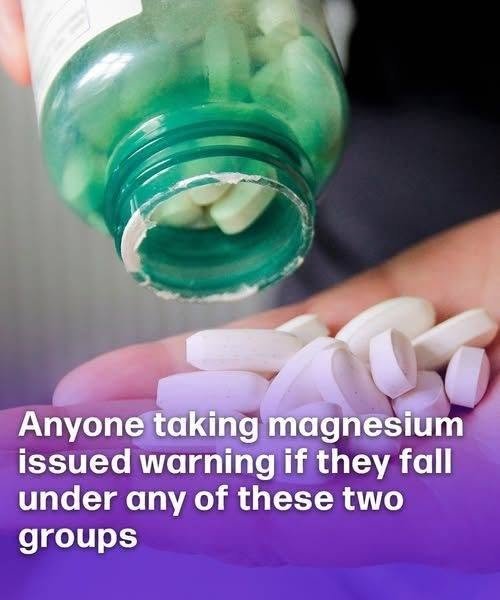
⚠️ Taking Magnesium? Two Groups Should Be Especially Careful
Magnesium is an essential mineral, and getting it from food is generally safe. The concern is mainly with magnesium supplements, antacids, and laxatives, particularly at high doses.
1. 🫘 People with reduced kidney function
The kidneys normally remove excess magnesium. If kidney function is significantly impaired, magnesium can accumulate in the blood and potentially cause toxicity.
Warning symptoms of very high magnesium can include:
-
Nausea or vomiting
-
Muscle weakness
-
Low blood pressure
-
Extreme drowsiness
-
Slow or irregular heartbeat
-
Difficulty breathing
People with kidney disease should not start high-dose magnesium without medical advice.
2. 👴 Older adults
Being over a certain age doesn’t automatically make magnesium unsafe. However, older adults are more likely to have reduced kidney function and take multiple medications, which can increase the chance of interactions or excessive magnesium intake.
A medication review can be particularly useful before starting a supplement.
Other important interactions
Magnesium can reduce absorption of some medications, including certain antibiotics and oral osteoporosis medicines (bisphosphonates). These often need to be taken at different times.
For adults, the NIH lists 350 mg/day as the upper limit for magnesium from supplements and medications, rather than from food. A healthcare professional may recommend a different amount for a specific medical reason.
Bottom line: The biggest concern is supplemental magnesium in people with impaired kidney function. Older adults should also check their medications and kidney function rather than assuming magnesium supplements are automatically beneficial or harmful.
If you tell me which magnesium product and dose you’re taking, plus any medications you use, I can explain the relevant precautions.