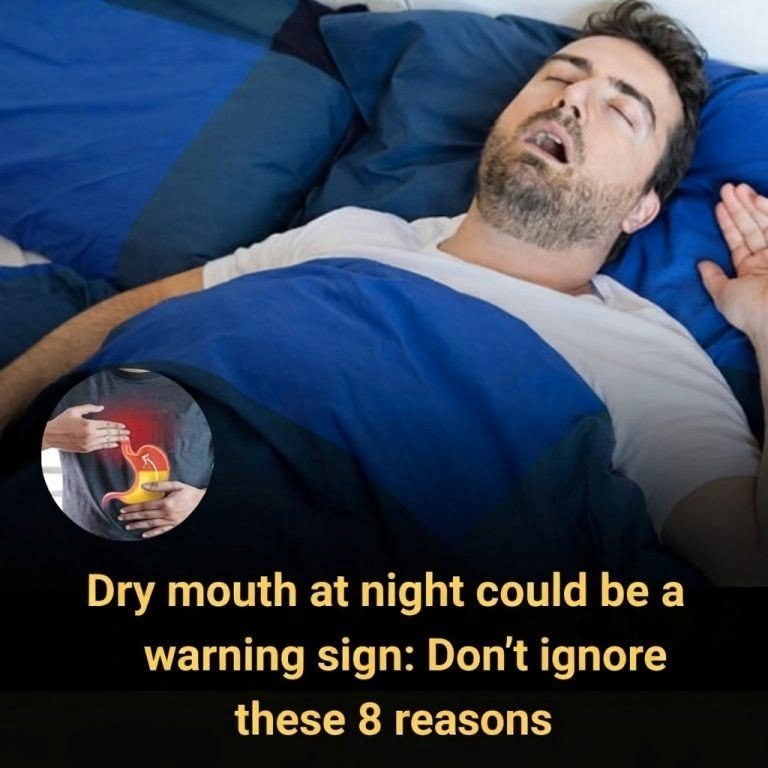
🌙 Dry Mouth at Night: 8 Signs You Shouldn’t Ignore
Waking up with a dry mouth is common and often harmless, especially if you sleep with your mouth open or don’t drink enough fluids. But persistent dry mouth (xerostomia) can sometimes point to an underlying problem or medication side effect.
8 things worth paying attention to
-
🥤 Excessive thirst
Persistent thirst together with frequent urination can occur with high blood glucose and should be evaluated. -
🚽 Frequent nighttime urination
Repeated trips to the bathroom can contribute to dehydration and may also occur with diabetes or other conditions. -
😴 Loud snoring or waking up gasping
Dry mouth can occur when you breathe through your mouth during sleep, including with obstructive sleep apnea. -
💊 Starting a new medication
Hundreds of medications can reduce saliva production, including some antihistamines, antidepressants, decongestants, and blood-pressure medicines. -
🦷 More cavities or gum problems
Saliva protects teeth and helps control harmful bacteria. Reduced saliva increases the risk of tooth decay and oral infections. -
👅 Burning, soreness, or difficulty swallowing
Significant dryness can make eating and swallowing uncomfortable and may cause irritation inside the mouth. -
👄 Persistent mouth sores or fungal infections
Recurrent oral thrush or sores can be associated with inadequate saliva and sometimes warrant investigation. -
😮💨 Persistent bad breath or difficulty speaking
Reduced saliva can make the mouth feel sticky and contribute to unpleasant breath.
What can help
Keep water nearby, stay adequately hydrated during the day, avoid tobacco, limit alcohol and excessive caffeine, and consider a humidifier if your bedroom air is very dry. Sugar-free gum or lozenges can stimulate saliva production.
Don’t stop a prescription medicine on your own. If dryness began after starting or changing a medication, ask your doctor or pharmacist whether it could be contributing.
Bottom line: Occasional morning dry mouth usually isn’t concerning. Persistent dryness accompanied by excessive thirst, frequent urination, swallowing problems, recurrent oral infections, or significant dental problems deserves medical or dental evaluation.