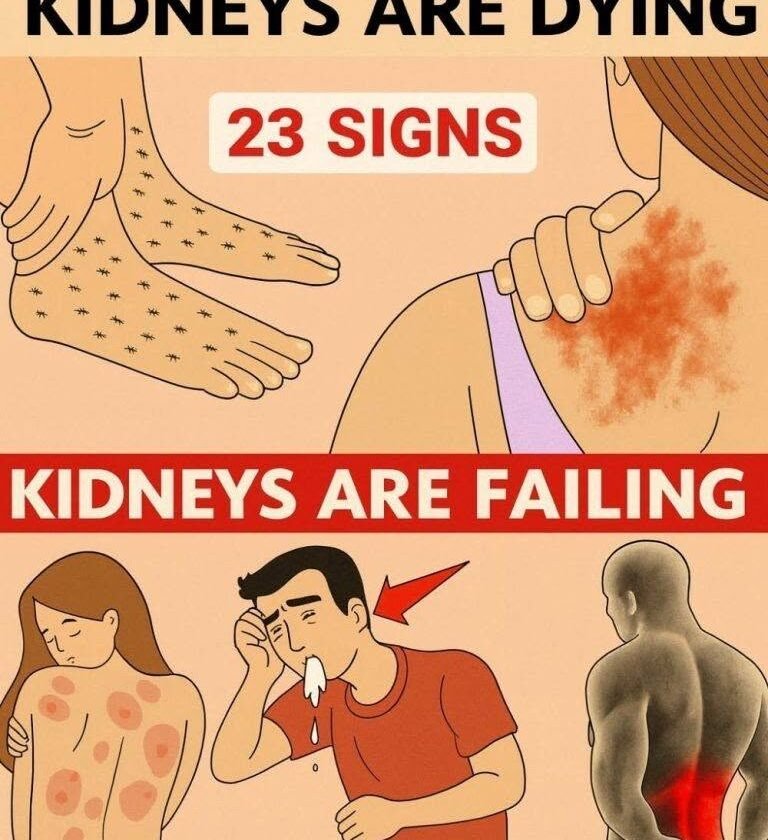
Kidney problems can develop gradually, and early kidney disease sometimes causes no symptoms at all. So a long list of “23 strange signs” can be misleading—many symptoms are nonspecific.
Symptoms that can occur with kidney problems
-
Swelling around the ankles, feet, legs, hands, or sometimes around the eyes
-
Changes in urination, such as much more or less urine, increased nighttime urination, or persistent foamy urine
-
Blood in the urine, which can make it pink, red, or cola-colored
-
Fatigue or weakness
-
Poor appetite, nausea, or vomiting
-
Itching or dry skin
-
Muscle cramps
-
Difficulty concentrating or unusual drowsiness
-
Shortness of breath, particularly when fluid accumulates
-
High blood pressure, which can both contribute to and result from kidney disease
-
Pain in the side/back can occur with some kidney conditions, although chronic kidney disease itself often doesn’t cause pain.
A key point
Symptoms alone cannot reliably tell you whether your kidneys are functioning normally. Blood and urine tests are much more useful. Common screening tests include serum creatinine/eGFR and a urine albumin-to-creatinine ratio (ACR).
People with diabetes, high blood pressure, cardiovascular disease, or a family history of kidney disease may benefit from regular kidney-function testing.
Seek urgent medical care for very little or no urine, severe breathlessness, severe weakness/confusion, or visible blood in the urine accompanied by significant pain or illness.
If you’re asking because you have a particular symptom—such as foamy urine, swollen legs, nighttime urination, or itching—tell me which one, and I can explain how strongly it points toward a kidney problem.