If you mean “What are 12 subtle signs that high creatinine might be associated with early kidney disease?”, there’s an important distinction: high creatinine itself usually causes no symptoms. Early chronic kidney disease (CKD) is often silent and is usually detected with blood and urine testing. NIDDK+1
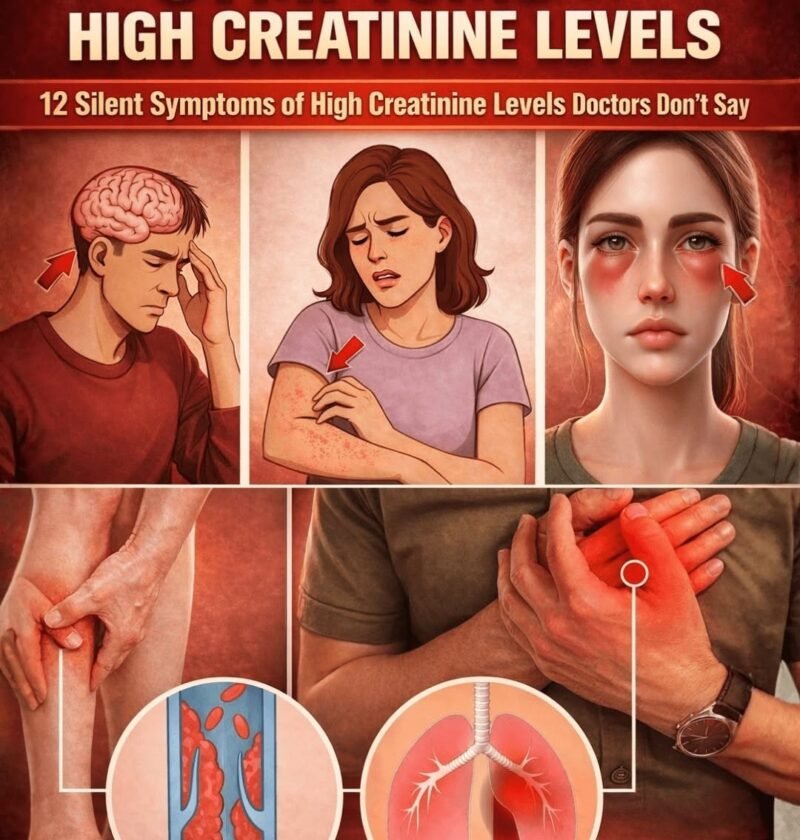
12 possible warning signs
-
Unusual tiredness or low energy
-
Difficulty concentrating or feeling mentally foggy
-
Trouble sleeping
-
Puffiness around the eyes, especially in the morning
-
Swelling of the feet, ankles, legs, or hands
-
Foamy or unusually bubbly urine, which can indicate protein in the urine
-
Urinating more frequently, particularly at night
-
Changes in the amount of urine produced
-
Dry or itchy skin
-
Muscle cramps, particularly at night
-
Reduced appetite or nausea
-
Shortness of breath, particularly when kidney disease is more advanced. NIDDK+1
The key point about creatinine
A high creatinine result doesn’t automatically mean kidney disease. Creatinine can also be influenced by muscle mass, recent intense exercise, eating a lot of cooked meat, creatine supplements, and certain medications. NKF
Doctors generally interpret creatinine alongside eGFR (estimated glomerular filtration rate) and a urine albumin-to-creatinine ratio (uACR). Persistent kidney damage or reduced kidney function over 3 months or more is important when diagnosing CKD. NIDDK+1
If you have a recent creatinine and eGFR result, tell me the numbers (plus your age and sex), and I can explain what they generally mean.