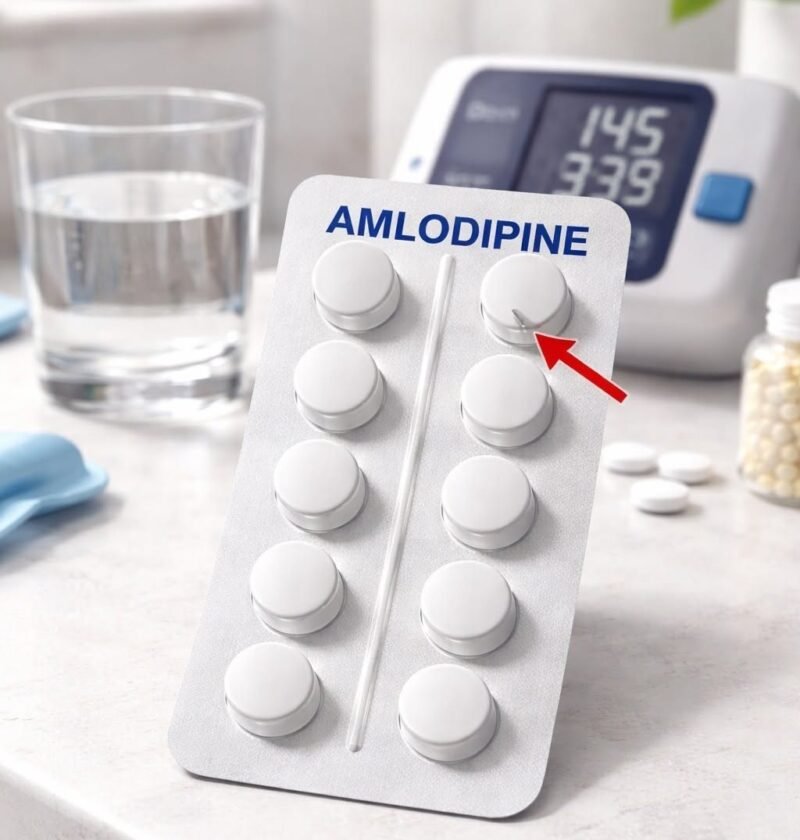
If you’re using this as a health-content headline, I’d make the claims more accurate and avoid implying that everyone taking amlodipine must stop eight specific habits. Amlodipine can cause dizziness, ankle/leg swelling, and low blood pressure, and alcohol can increase the risk of low blood pressure. It also has important interactions with some medicines and supplements.
N
nhs.uk
+1
Writing
💊 8 Habits to Reconsider If You Take Amlodipine — And Why
If you take amlodipine for high blood pressure or angina, your everyday habits can sometimes affect how well you tolerate the medicine.
Here are 8 things worth paying attention to:
Drinking too much alcohol
Alcohol can add to amlodipine’s blood-pressure-lowering effect and may make dizziness or light-headedness worse.
Getting up too quickly when you feel dizzy
Amlodipine can cause dizziness in some people. Move slowly from lying or sitting to standing, particularly if you feel unsteady.
Ignoring persistent ankle or leg swelling
Swollen ankles and feet are a common side effect. If swelling is troublesome or persistent, tell your doctor rather than simply putting up with it.
Stopping amlodipine on your own
Even if your blood pressure feels normal, don’t stop taking it unless your clinician tells you to. Blood pressure treatment often needs to be continued long term.
Taking new medicines without checking first
Some medicines—including certain antibiotics, antifungals, HIV medicines and other blood-pressure drugs—can interact with amlodipine.
Starting herbal remedies or supplements without asking
Even “natural” products can interact with prescription medicines. St John’s wort, for example, can affect amlodipine.
Doubling up after a missed dose
Don’t take two doses to make up for a missed one. Follow the instructions that came with your prescription or ask your pharmacist what to do.
Ignoring unusual or severe symptoms
Severe dizziness, fainting, difficulty breathing, or other concerning symptoms should not simply be blamed on getting older or being tired—seek medical advice promptly.
The important takeaway: Amlodipine is generally well tolerated, but taking it safely means paying attention to side effects, interactions and your blood pressure rather than making medication changes yourself.
Always follow your own prescription and speak with a doctor or pharmacist before changing your medication, diet, supplements or routine.
One important correction to many online posts: grapefruit is not a straightforward “never” with amlodipine according to FDA pharmacokinetic data, while the current NHS guidance advises avoiding grapefruit/grapefruit juice because of potential side effects. If you’re creating public-facing medical content, it’s better to acknowledge that guidance can differ rather than present it as an absolute universal rule.
N
nhs.uk
+1
I can also turn this into a long-form, curiosity-driven Facebook article with a stronger hook, “#1 is the one most people overlook” style structure, and a disclaimer.
N
Sources