7 “Blood-Thinning” Foods — What You Should Actually Know
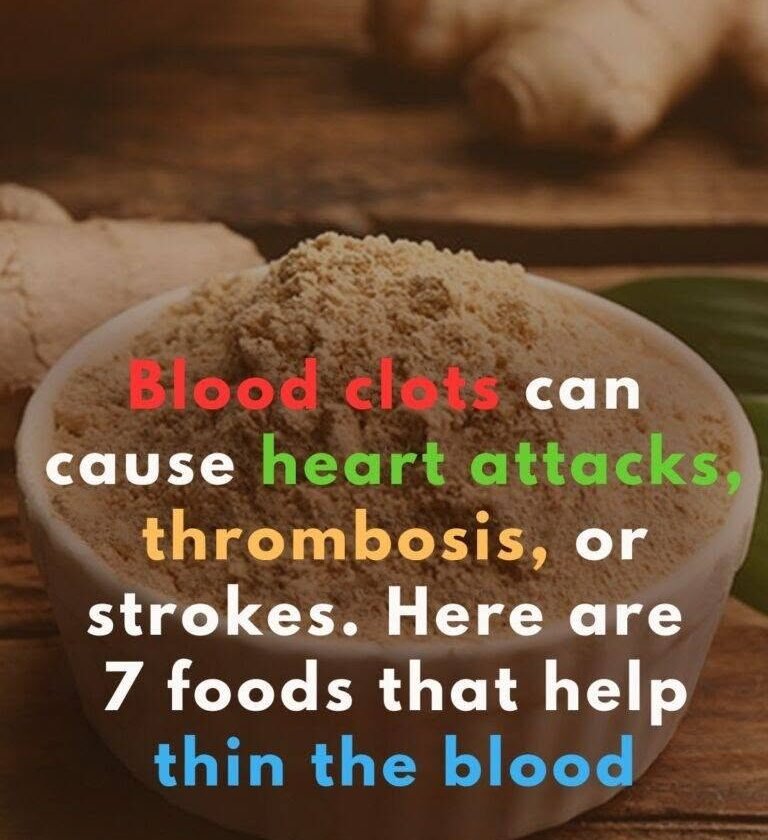
The phrase “blood-thinning foods” is a bit misleading. Foods don’t thin blood in the same way anticoagulant medicines such as warfarin or apixaban do. Some foods contain compounds that can modestly affect platelet activity or clotting, but they shouldn’t be used as a substitute for prescribed medication.
Seven foods commonly mentioned are:
- Garlic 🧄 — May have mild antiplatelet effects, particularly in concentrated forms.
- Ginger — Has compounds that may influence platelet aggregation.
- Turmeric — Curcumin has antiplatelet effects in laboratory and experimental studies.
- Fatty fish 🐟 — Salmon, sardines and mackerel provide omega-3 fatty acids, which influence platelet and cardiovascular biology.
- Cayenne/chili peppers 🌶️ — Capsaicin has been studied for effects on cardiovascular function, but it isn’t an established blood thinner.
- Green tea 🍵 — Contains compounds that may affect clotting, while also containing vitamin K, which is relevant for people taking warfarin.
- Dark leafy greens 🥬 — These are rich in vitamin K. They don’t “thin” blood; in fact, vitamin K is important for normal clotting.
⚠️ If you’re taking a blood thinner
This is where viral lists can cause problems.
If you’re taking warfarin, you generally shouldn’t suddenly eliminate or dramatically increase vitamin-K-rich foods such as spinach, kale, collard greens or other leafy vegetables. The important principle is to keep your vitamin K intake consistent and have your INR monitored as advised.
With anticoagulants or antiplatelet drugs, concentrated garlic, ginger, turmeric or fish-oil supplements can also deserve discussion with your doctor or pharmacist because combining multiple agents that affect bleeding may increase risk.
What should you eat?
For cardiovascular health, don’t try to build a diet around “blood-thinning” foods. A balanced pattern containing vegetables, fruits, whole grains, legumes, nuts, fish and minimally processed foods is a much better-supported approach.
And never stop or reduce a prescribed anticoagulant because you’ve started eating one of these foods.
If you tell me which blood thinner you’re taking (if any), I can explain which foods and supplements deserve particular caution with that specific medicine.