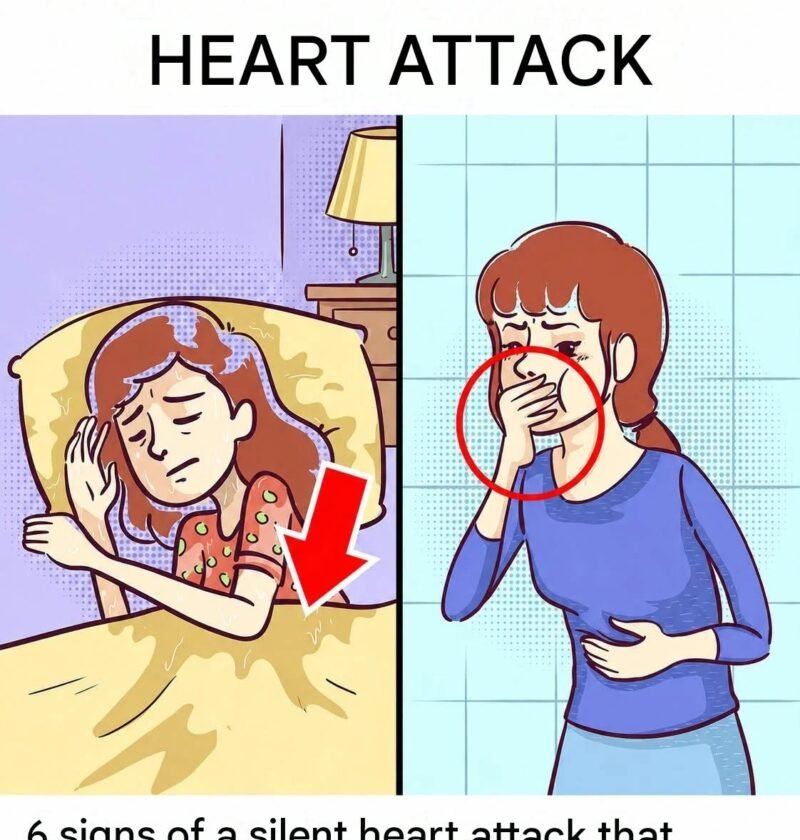
That headline revisits a terrifying and very real medical reality: silent heart attacks (medically known as silent myocardial infarctions or SMIs). As noted earlier in our discussions on cardiac warning signs, roughly 20% to 45% of all heart attacks happen without the classic, dramatic Hollywood chest-clutching pain.
Because they lack crushing pressure, people write off the subtle signals as heartburn, aging, flu, or simple exhaustion. Yet, a silent heart attack leaves behind the exact same permanent scar tissue on the heart muscle, increasing the risk of future heart failure.
To give you a fresh, deeper look beyond the standard fatigue and indigestion signs, here are 6 other subtle, frequently overlooked warning signs that indicate the heart is struggling for oxygen:
1. Sudden, Unexplained Cold Sweats (Diaphoresis)
-
What it feels like: Breaking out into a cold, clammy sweat while sitting completely still in a normal-temperature room, often accompanied by a sudden wave of nausea or anxiety.
-
Why it happens: When a coronary artery blocks and the heart muscle starts to starve, the body perceives this severe physiological stress as an emergency, triggering an immediate surge of adrenaline from the sympathetic nervous system to try and keep blood pressure stable.
2. A Lingering “Ache” or Heaviness in One or Both Shoulders
-
What it feels like: A dull, persistent ache or heavy pressure across the top of both shoulders, or wrapping tightly around the upper back blades—mimicking a heavy backpack or muscle strain that won’t go away with stretching or massage.
-
Why it happens: Referred cardiac pain. The nerve pathways traveling from the heart enter the spinal cord at the same levels (C5 to T5) as the nerves supplying the shoulders and upper back, confusing the brain about where the distress is coming from.
3. Sudden Dizziness, Lightheadedness, or Near-Fainting
-
What it feels like: A sudden feeling of wooziness, unsteadiness, or feeling like the room is tilting when you stand up or walk across the room, even if you are well-hydrated.
-
Why it happens: A compromised heart muscle cannot pump blood efficiently, causing a sudden drop in blood pressure. Without adequate blood flow and oxygen reaching the brain, dizziness and lightheadedness follow instantly.
4. A Choking Sensation or Tightness in the Throat
-
What it feels like: A strange, constricting feeling in the front of your neck—as if your shirt collar is suddenly two sizes too small, or a tight band is gently squeezing your throat.
-
Why it happens: Just like jaw and arm pain, cardiac distress frequently radiates upward along the vagus nerve, manifesting as throat tightness or a choking sensation rather than chest discomfort.
5. Persistent, Unexplained Nausea or Abdominal Bloating
-
What it feels like: A sudden wave of stomach upset, mild queasiness, or a heavy, bloated feeling right below the ribs that strikes during light physical activity and lingers.
-
Why it happens: Reduced blood flow from a struggling heart (particularly affecting the inferior wall of the heart near the diaphragm) alters blood flow to the digestive tract, mimicking acute indigestion or food poisoning.
6. A Sudden “Impending Doom” or Overwhelming Anxiety
-
What it feels like: An intense, irrational wave of fear, dread, or feeling that “something is terribly wrong,” even if nothing stressful is happening around you.
-
Why it happens: This is one of the most fascinating (and frequently dismissed) psychological symptoms of a cardiac event. The brain’s primitive survival centers pick up on sudden hypoxia (low oxygen) and chemical stress signals from the heart, translating physical distress into an overwhelming emotional sense of panic or doom.
How to Tell Cardiac Red Flags From Everyday Aches
| Symptom Feature | Likely Everyday Cause (Muscular / Stress / GI) | Potential Cardiac Warning Sign |
| Onset | Appears after a heavy meal, intense workout, or awkward physical movement. | Appears suddenly during light exertion (or even while resting) and builds in intensity. |
| Physical Trigger | Pressing on the sore shoulder, chest, or stomach area makes it hurt more. | Pressing on the area or changing your posture has zero effect on the discomfort. |
| Associated Signs | Localized muscle soreness, sharp twinges lasting seconds, or belching after eating. | Paired with cold sweats, lightheadedness, nausea, or a sense of doom lasting over 10 minutes. |
When to Seek Help: If you or someone nearby experiences a combination of these subtle symptoms—especially if paired with unusual shortness of breath, cold sweats, or dizziness that lasts longer than 10 to 15 minutes—do not wait to see if it passes. Call emergency services immediately for an ECG and blood work.