What Urine Color Can Tell You About Your Health
Urine color can provide clues, but it isn’t a diagnosis by itself. Hydration, foods, vitamins, and medications can all change its appearance.
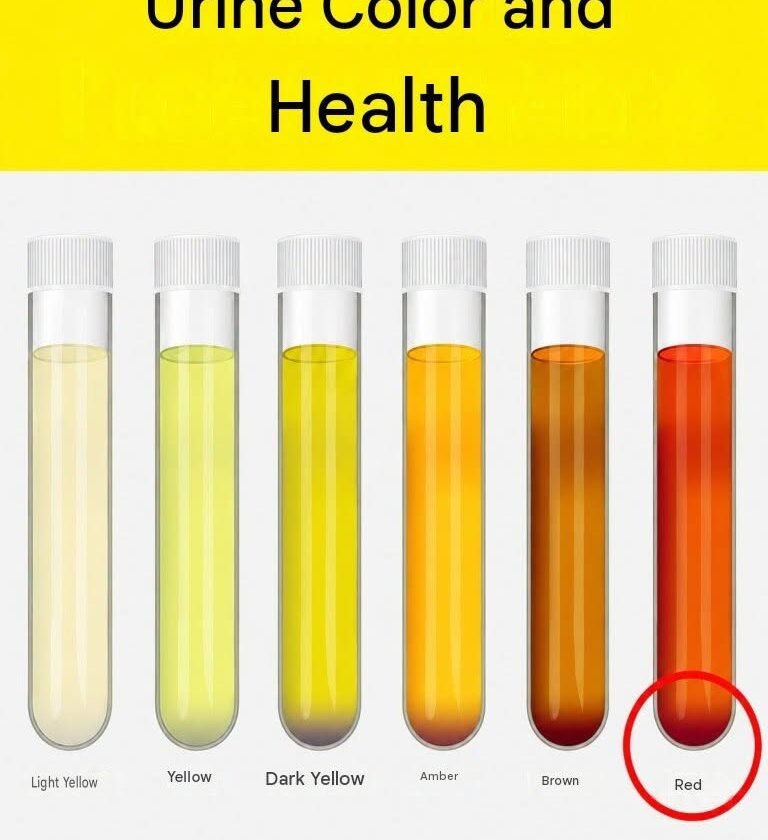
- Pale yellow: Usually a sign of good hydration.
- Dark yellow/amber: Often means you’re somewhat dehydrated; drinking fluids may help.
- Clear/colorless: You may be drinking more fluid than you need, although it can also be normal.
- Pink/red: Can result from foods such as beetroot, but may indicate blood in the urine and should be medically evaluated if unexplained.
- Orange: Sometimes caused by dehydration or certain medications, but persistent orange urine warrants medical advice.
- Blue/green: Uncommon; certain medications, dyes, or infections can cause it.
- Brown/tea-colored: Can occur with severe dehydration or certain medical conditions and should be checked promptly, particularly if persistent.
- Cloudy/milky: May occur with a urinary infection, crystals, or other conditions, especially when accompanied by pain, burning, fever, or a strong odor.
Seek medical care for unexplained red, brown, or persistently abnormal urine, particularly if there’s pain, fever, jaundice, or difficulty urinating.