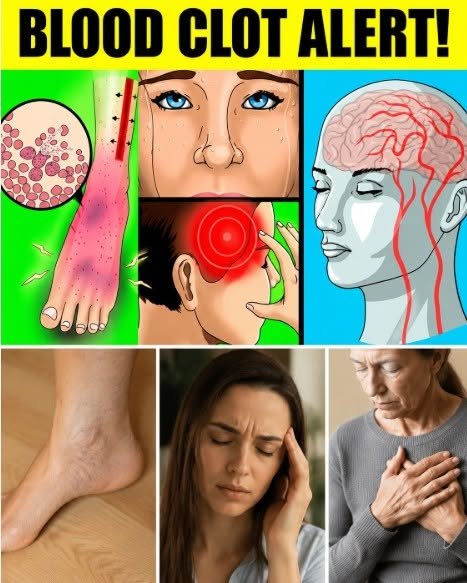
That headline highlights a genuinely critical medical topic. When people hear “blood clot,” they usually picture a sudden stroke or a massive heart attack, but many dangerous clots start in the deep veins of the body—a condition known as Deep Vein Thrombosis (DVT)—or break free and travel to the lungs as a Pulmonary Embolism (PE), which is a life-threatening medical emergency.
While sensationalized articles often pad these lists with vague sensations like general fatigue, true blood clots in the veins or lungs produce distinct, localized physical signs that you should never ignore.
The 7 Real, Clinical Signs of a Dangerous Blood Clot
1. Unilateral Swelling in One Leg or Arm (The #1 DVT Sign)
-
What it looks like: One entire leg (or sometimes an arm) swells up noticeably, while the other limb remains completely normal.
-
Why it matters: If a blood clot blocks blood flow in a deep vein, fluid backs up behind the blockage. A crucial distinction: simple ankle swelling from standing too long usually affects both legs equally, whereas DVT almost always affects only one side.
2. Localized Pain, Cramping, or Tenderness (Often in the Calf)
-
What it looks like: A deep, persistent ache, cramp, or tenderness in your calf or thigh—often feeling like a severe muscle pull that refuses to go away with rest or stretching.
-
Why it matters: The calf is the most common birthplace for deep vein clots. If pressing gently on the muscle causes sharp, deep tenderness (or if pulling your toes upward toward your shin shoots pain into your calf, known as a positive Homan’s sign), treat it with high caution.
3. Skin Discoloration (Redness, Paleness, or a Purplish Tint)
-
What it looks like: The skin over the painful or swollen area turns visibly red, ruddy, or sometimes slightly bluish/purple compared to the surrounding skin.
-
Why it matters: Backed-up blood and localized inflammation change the skin’s surface appearance. In lighter skin tones, redness is common; in darker skin tones, the area may look darker, bruised, or discolored.
4. Skin That Feels Warm or Hot to the Touch
-
What it looks like: When you place your hand over the swollen or painful spot on your leg or arm, that specific patch of skin feels noticeably warmer than the healthy limb next to it.
-
Why it matters: Active inflammation and trapped blood elevate the local skin temperature around the clot.
5. Sudden, Unexplained Shortness of Breath (Lung Clot Sign)
-
What it looks like: You suddenly feel winded, breathless, or unable to catch your breath while doing routine tasks (like walking across a room or folding laundry), even though your lungs are clear and you have no asthma or cold symptoms.
-
Why it matters: This is a major warning sign that a blood clot has broken free from a vein in your leg and traveled up into your lungs (Pulmonary Embolism).
6. Sudden, Sharp Stabbing Chest Pain That Worsens When Breathing In
-
What it looks like: A sharp, knife-like pain in your chest or upper back that intensifies the exact moment you take a deep breath, cough, or twist your torso.
-
Why it matters: While heart attack pain is usually a heavy pressure, PE chest pain is typically sharp and pleuritic (worsened by breathing movements) because the clot irritates the lining of the lungs.
7. Unexplained Cough (Sometimes with Blood-Streaked Sputum)
-
What it looks like: A sudden, dry, persistent cough that flares up out of nowhere—or a cough that produces pink, blood-tinged mucus.
-
Why it matters: Irritation in the pulmonary blood vessels from a lung clot frequently triggers a sudden cough and minor bleeding into the airways.
Who Is Most at Risk for Blood Clots?
You don’t need to panic over every minor leg cramp, but vigilance is vital if you have any major risk factors:
-
Prolonged Immobility: Long-haul flights (over 4 hours), strict bed rest after surgery, or sitting immobile at a desk for hours without walking.
-
Medical History & Genetics: Active cancer, previous blood clots, or inherited clotting disorders (like Factor V Leiden).
-
Hormones & Medications: Birth control pills, estrogen replacement therapy, or pregnancy.
-
Trauma or Major Surgery: Orthopedic surgeries (especially hip or knee replacements) significantly spike clot risk in the weeks following the procedure.
When to Seek Emergency Medical Care: If you experience unilateral leg swelling and pain, go to urgent care or an emergency room for an ultrasound. If you experience sudden shortness of breath, sharp chest pain, rapid heart rate, or coughing up blood, call emergency services (911) immediately—a pulmonary embolism requires rapid medical intervention with blood thinners.