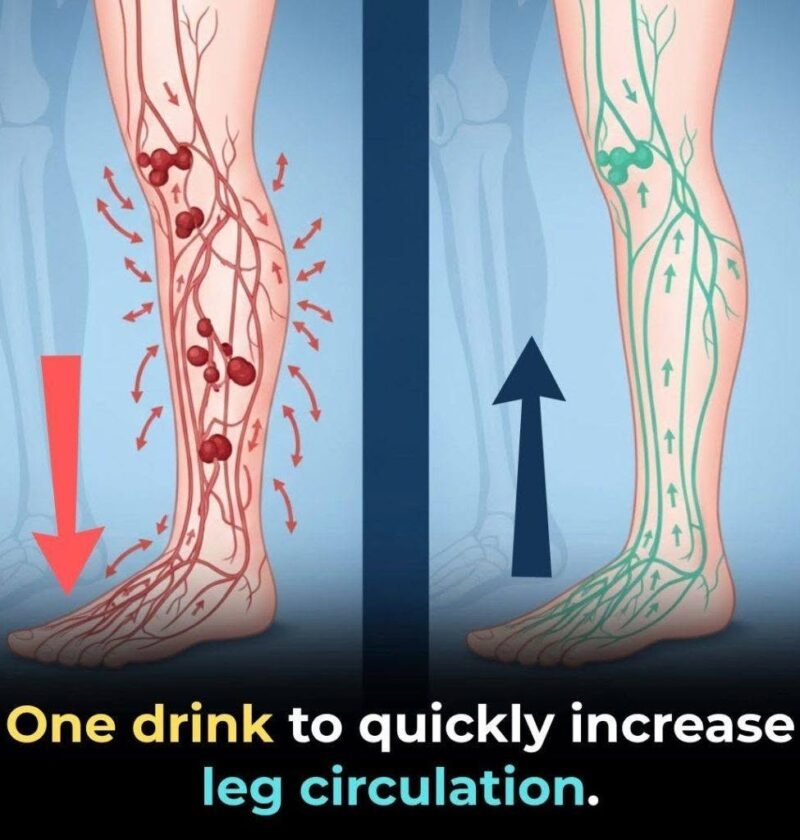
When you click “See more” on that viral headline—“Can One Drink Improve Circulation in Your Legs? Here’s What Actually Helps”—the article almost always pitches an expensive “miracle superfood juice” (like beet juice, cayenne pepper tonics, or turmeric elixirs) as a quick fix for heavy, tired, or cold legs.
The clinical reality is more nuanced: no single drink can magically cure chronic vein disease or unblock a blocked artery overnight. However, certain beverages contain specific compounds that genuinely improve vascular endothelial function (how well your blood vessels expand) and support healthy blood flow.
1. The Only Drinks That Actually Support Circulation (And Why)
While no drink is a cure-all, three beverages have solid backing in vascular science:
-
Pure Beet Juice (Rich in Dietary Nitrates):
-
How it works: Beets are packed with inorganic nitrates. When you drink beet juice, oral bacteria convert those nitrates into nitrite, and your stomach/bloodstream turns them into nitric oxide (NO). Nitric oxide is a potent vasodilator—it signals the smooth muscle cells in your blood vessel walls to relax and widen, lowering blood pressure and making it easier for blood to travel down to your legs and back up.
-
The catch: It works best for active adults or those with mild circulatory sluggishness; it will not reverse advanced varicose veins or severe blockages.
-
-
Flavanol-Rich Cocoa (Pure Dark Chocolate / Cacao):
-
How it works: High-flavanol cocoa stimulates nitric oxide production, keeps platelets from sticking together too easily, and improves the flexibility of microvessels. (Note: This means unsweetened or high-cacao dark cocoa, not heavily processed milk chocolate loaded with sugar.)
-
-
Plain Water (The Most Important “Drink”):
-
How it works: Dehydration makes your blood thicker and more viscous, forcing your heart to work harder to pump fluid down to your lower extremities. Simply staying properly hydrated prevents blood from becoming sluggish and pooling in the lower legs.
-
2. What Doesn’t Work (Clearing Up the Hype)
-
The “Detox Tea” Myth: Teas advertised to “cleanse your veins” or “melt away plaque” have zero clinical evidence. Plaque buildup in arteries (atherosclerosis) is a structural, inflammatory condition that requires medical management, diet changes, and exercise—not a tea cleanse.
-
Miracle Spice Tonics Alone: While ginger, cayenne, and turmeric have mild anti-inflammatory and circulation-boosting properties, drinking a spicy shot once a day will not overcome a sedentary lifestyle or chronic vein valve failure.
3. What Actually Helps Leg Circulation (The Proven Strategies)
If your legs feel heavy, achy, cold, or swollen at the end of the day, beverages are only a tiny piece of the puzzle. True leg circulation relies on mechanical movement and muscle pumps:
-
Activate the “Second Heart” (The Calf Muscle Pump):
-
Veins in your legs have to fight gravity to push blood back up to your heart. They rely entirely on your calf muscles squeezing them with every step. Regular walking, calf raises, or ankle pumps while sitting are infinitely more effective for leg circulation than any drink.
-
-
Medical Compression Stockings:
-
If you stand or sit all day, wearing graduated compression stockings applies gentle, precise pressure to your lower legs—narrowing the superficial veins so blood can shoot upward more efficiently and preventing fluid pooling (edema).
-
-
Elevate Your Legs Daily:
-
Lying down for 15–20 minutes with your legs propped up higher than your heart uses gravity to drain pooled blood and fluid out of your lower calves.
-
-
Address the Root Causes:
-
Managing blood pressure, lowering LDL cholesterol, quitting smoking (which severely constricts blood vessels), and reducing excess body weight protect your vascular system far more than any supplement or tonic.
-