5 Diabetes Symptoms That May Be More Noticeable at Night
The headline is a little misleading: diabetes doesn’t have a special set of symptoms that only occur at night. However, some symptoms can become particularly noticeable when you’re sleeping. (NIDDK)
🌙 Five possible clues
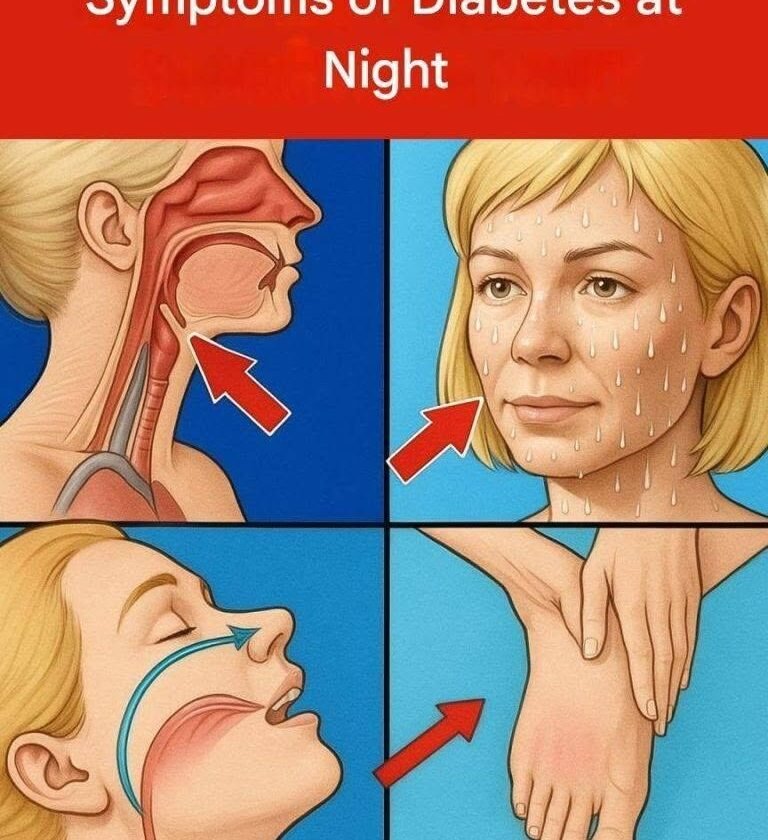
- Waking frequently to urinate — high blood glucose can cause increased urination, including during the night. (CDC Stacks)
- Excessive thirst or dry mouth — increased urination can cause fluid loss and make you very thirsty. (NIDDK)
- Night sweats — in someone taking insulin or certain diabetes medicines, sweating during sleep can be a sign of low blood sugar (hypoglycemia). (NIDDK)
- Nightmares or disturbed sleep — nighttime hypoglycemia can cause nightmares and may leave you tired, irritable, confused, or with a headache when you wake. (NIDDK)
- Burning, tingling, or pain in the feet — diabetic nerve damage can cause symptoms that are particularly troublesome at night. (NIDDK)
🩸 Important: these symptoms don’t prove diabetes
Frequent nighttime urination, thirst, sweating, and poor sleep have many possible causes. If you’re repeatedly experiencing them, a blood test such as A1C or fasting blood glucose can determine whether diabetes or prediabetes is present.
If you already have diabetes and take insulin or a medicine that can cause hypoglycemia, unexplained nighttime sweating, shakiness, confusion, or nightmares should prompt you to discuss your glucose readings and medication regimen with your healthcare professional. Blood glucose below 70 mg/dL (3.9 mmol/L) is generally considered low. (NIDDK)
Bottom line: Nighttime urination and thirst can be clues to high blood sugar, while sweating and nightmares can sometimes signal low blood sugar. Neither should be diagnosed from symptoms alone.