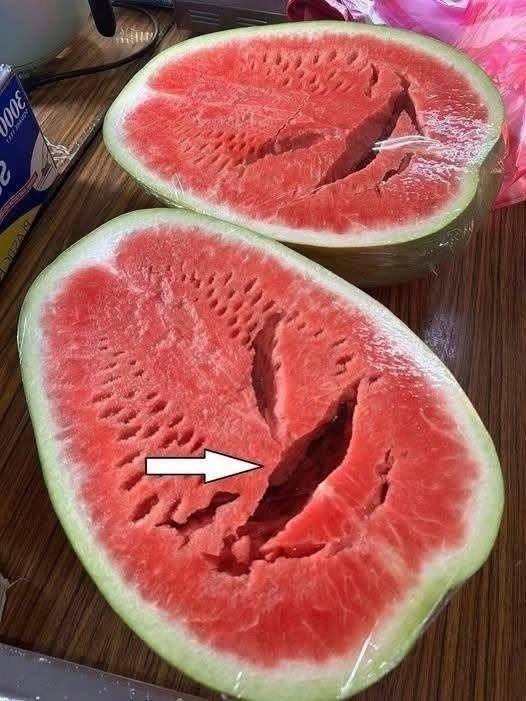
🍉 Cracks Inside a Watermelon: Should You Stop Eating It?
No—not necessarily. The viral claim that an internally cracked watermelon must be thrown away is misleading.
If you cut open a watermelon and see cracks, gaps, or a hollow-looking center, it may have a naturally occurring condition called “hollow heart.” It is associated with growing conditions and pollination problems, and the watermelon is generally safe to eat. The National Watermelon Promotion Board specifically says these melons are safe and may even taste sweeter around the cracks. (Watermelon Board)
🍉 What the cracks mean
“Hollow heart” is a physical/quality defect, not a disease or evidence of poisonous chemicals. The cracks can range from a small split to large cavities dividing the flesh. (Bayer Vegetables)
🚨 When should you throw the watermelon away?
Don’t eat it if you notice signs of spoilage, such as:
- Mold
- Slimy or mushy flesh
- An unpleasant or fermented smell
- Obvious decay
- Extensive deterioration or unusual discoloration
A damaged or decaying rind is also a reason for caution because contamination can be transferred from the rind to the flesh during cutting. (Civil Focal Services)
🧊 After cutting
Wash the outside of the watermelon before cutting it, use a clean knife and cutting surface, and refrigerate the cut fruit promptly. (Watermelon Board)
Bottom line: 🍉 Cracks inside ≠ poison or pesticide contamination. If the watermelon otherwise looks, smells, and tastes fresh, internal “hollow heart” cracks alone are not a reason to throw it away.