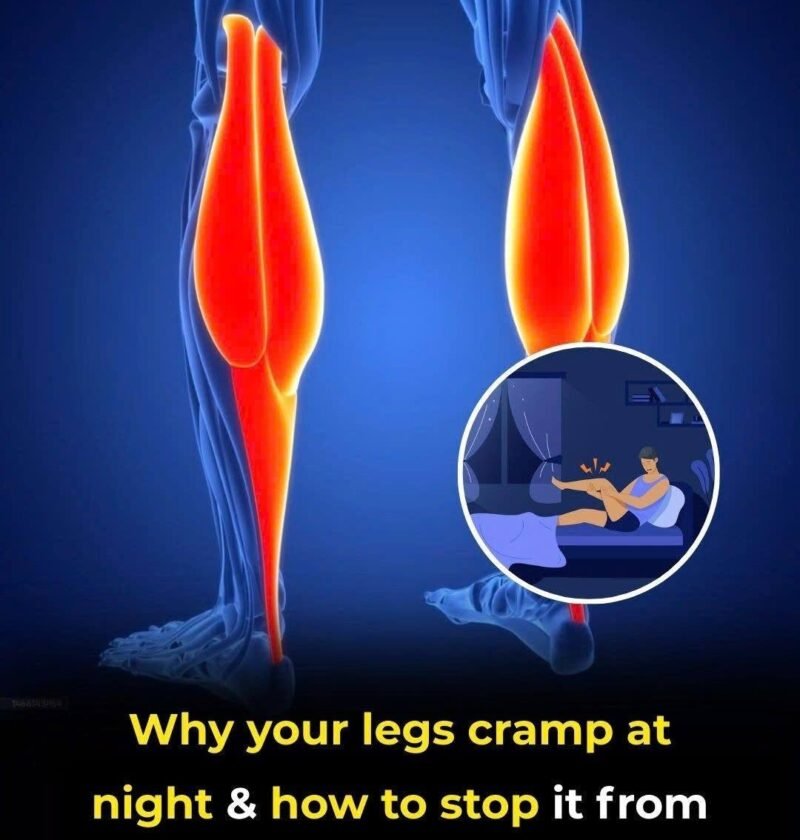
Why Do Leg Cramps Happen While Sleeping?
Nighttime leg cramps are sudden, involuntary muscle contractions, most often affecting the calf or foot. They’re common, especially with increasing age, and usually aren’t dangerous—but frequent or severe cramps can sometimes signal an underlying problem.
Common reasons
Muscle fatigue or overuse — strenuous exercise, prolonged standing, or unusual physical activity during the day can contribute.
Long periods of sitting or inactivity — muscles that remain in one position for a long time may be more prone to cramping.
Muscle shortening during sleep — pointing the toes or keeping the foot in certain positions may contribute to calf cramps.
Pregnancy — leg cramps become more common during pregnancy.
Dehydration — inadequate fluid intake can contribute, particularly when combined with heavy sweating.
Certain medications — some medicines, including certain diuretics and cholesterol-lowering drugs, have been associated with muscle cramps.
Nerve problems — conditions affecting nerves in the legs can sometimes cause cramping.
Poor circulation — vascular problems can contribute to leg discomfort and cramping.
Electrolyte abnormalities — abnormal levels of minerals such as potassium, calcium, or magnesium can sometimes contribute, although simply taking magnesium isn’t a universal solution.
Age-related changes — nighttime leg cramps become more frequent with age.
What to do when a cramp strikes
Gently stretch the affected muscle. For a calf cramp, straighten the leg and pull your toes toward your face. Standing up and putting weight on the affected leg can also help. Gentle massage or warmth may provide additional relief.
If cramps are frequent, increasingly painful, associated with swelling or weakness, or interfering with sleep regularly, talk with a healthcare professional. Don’t automatically assume you need electrolyte or magnesium supplements—the cause matters.
Seek urgent medical attention if one leg becomes swollen, red, warm, and painful, particularly if the symptoms are new or accompanied by chest pain or shortness of breath, because that pattern can indicate a blood clot rather than an ordinary nighttime cramp.