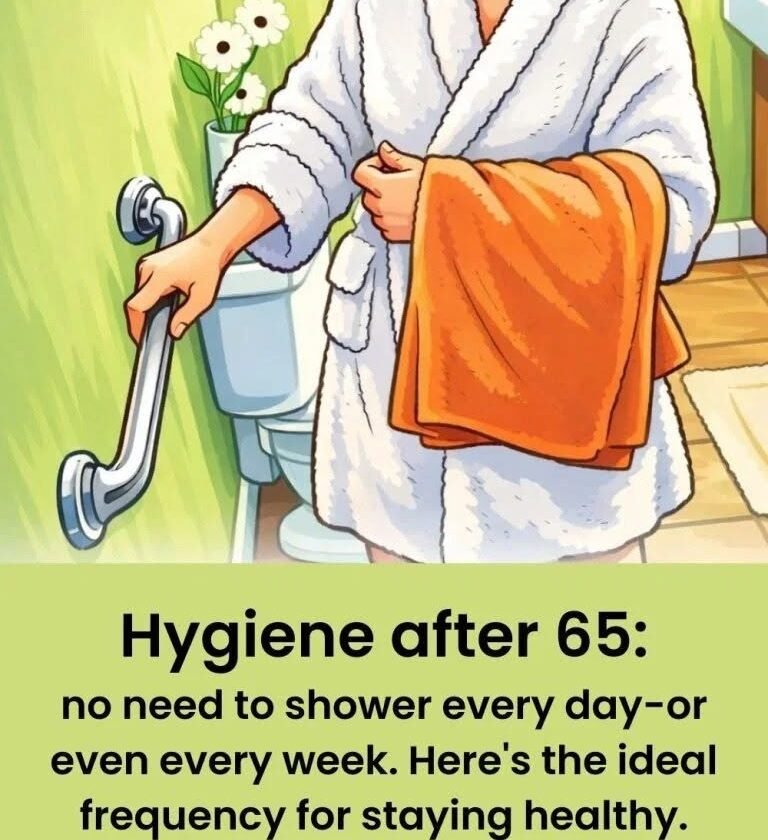
While a daily shower is a deeply ingrained habit for many, dermatologists and geriatric health experts note that after the age of 65, daily full-body showers can actually do more harm than good.
This isn’t about personal hygiene; it’s about how our skin changes biologically as we age.
Why Skin Changes After 65
As we get older, our bodies undergo natural shifts that alter how our skin handles water, soap, and heat:
-
Decreased Oil Production: Sebaceous (oil) glands slow down significantly, meaning the skin produces fewer natural oils to keep itself lubricated.
-
A Thinner Skin Barrier: The outermost layer of the skin becomes thinner and loses elasticity, making it much harder to retain moisture.
-
Slower Cell Turnover: Younger skin quickly replaces moisture and repairs micro-damage; older skin takes much longer to recover from being stripped.
Why Daily Showers Cause Problems
When you take a daily shower—especially with hot water and soap—it triggers a few cascading issues:
-
Stripping Essential Lipids: Hot water and harsh detergents efficiently dissolve what little natural oil mature skin has.
-
Severe Dryness and Itching: Without that protective lipid barrier, moisture evaporates rapidly, leading to chronic dryness, tightness, flakiness, and relentless itching (a condition sometimes called asteatotic eczema).
-
Risk of Infection: Severely dry, cracked skin can develop tiny micro-fissures, providing an easy entry point for bacteria and increasing the risk of skin infections.
What Dermatologists Recommend Instead
Adapting your hygiene routine doesn’t mean sacrificing cleanliness; it means shifting toward a gentler approach that protects your skin:
-
Aim for 2 to 3 Full Showers a Week: For most older adults who aren’t heavily sweating or doing physical labor, full-body showers two to three times a week are plenty.
-
Use “Targeted Washing” on Other Days: On the days you skip a full shower, focus on a quick “sponge bath” or wash of the areas where sweat and bacteria naturally accumulate—the armpits, groin, feet, and face/skin folds.
-
Lower the Temperature: Hot water feels relaxing, but it strips skin oils much faster than lukewarm water.
-
Keep It Short: Limit showers to 5 to 10 minutes to minimize skin exposure to water and cleansing agents.
-
Choose Gentle Cleansers: Swap out heavily scented, harsh bar soaps for fragrance-free, hydrating body washes, syndet bars, or cleansing oils.
-
Moisturize Immediately: Apply a rich, fragrance-free cream or ointment while the skin is still slightly damp after patting dry (avoid vigorous rubbing) to lock in hydration.
Are you exploring these skin and shower adjustments for yourself or a family member, or looking for ways to manage stubborn dry skin?