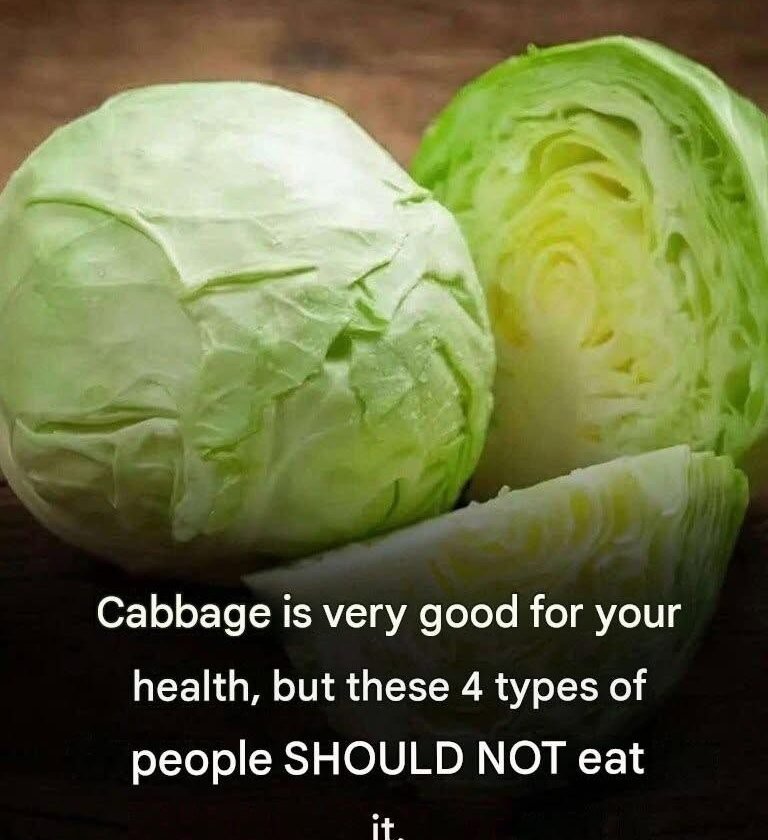
While cabbage is packed with vitamins C and K, fiber, and powerful antioxidants, it isn’t the best choice for everyone. Certain health conditions or medications mean that eating cruciferous vegetables requires extra caution.
Here are four types of people who may need to limit or avoid eating cabbage:
4 Groups Who Should Be Cautious with Cabbage
-
1. People on Blood Thinners (Anticoagulants): Cabbage is exceptionally rich in Vitamin K, which plays a vital role in blood clotting. If you take blood-thinning medications like warfarin (Coumadin), sudden or dramatic changes in your Vitamin K intake can interfere with how well your medication works, potentially increasing your risk of blood clots.
-
2. Individuals with Hypothyroidism (Underactive Thyroid): Cabbage contains compounds called goitrogens. When eaten raw and in large quantities, goitrogens can interfere with the thyroid gland’s ability to absorb iodine, potentially slowing down thyroid hormone production and worsening hypothyroid symptoms. (Note: Cooking cabbage significantly reduces its goitrogenic effect).
-
3. People with Irritable Bowel Syndrome (IBS) or Chronic Bloating: Cabbage contains raffinose, a complex sugar that humans lack the enzyme to fully break down in the small intestine. When it reaches the large intestine, gut bacteria ferment it, producing excess gas, severe bloating, and abdominal discomfort for those with sensitive digestive systems or conditions like IBS.
-
4. Anyone with Active Kidney Disease: Because raw cabbage is relatively high in potassium, individuals with advanced chronic kidney disease—whose kidneys struggle to filter excess potassium from the blood—may need to restrict their intake to prevent dangerous potassium buildup (hyperkalemia).
A Quick Tip on Preparation: If you love cabbage but fall into one of these categories (other than severe kidney disease), cooking it thoroughly by boiling, steaming, or roasting breaks down many of the goitrogens and complex sugars, making it much gentler on your system.
Are you or someone you know trying to manage one of these health conditions while navigating your diet?