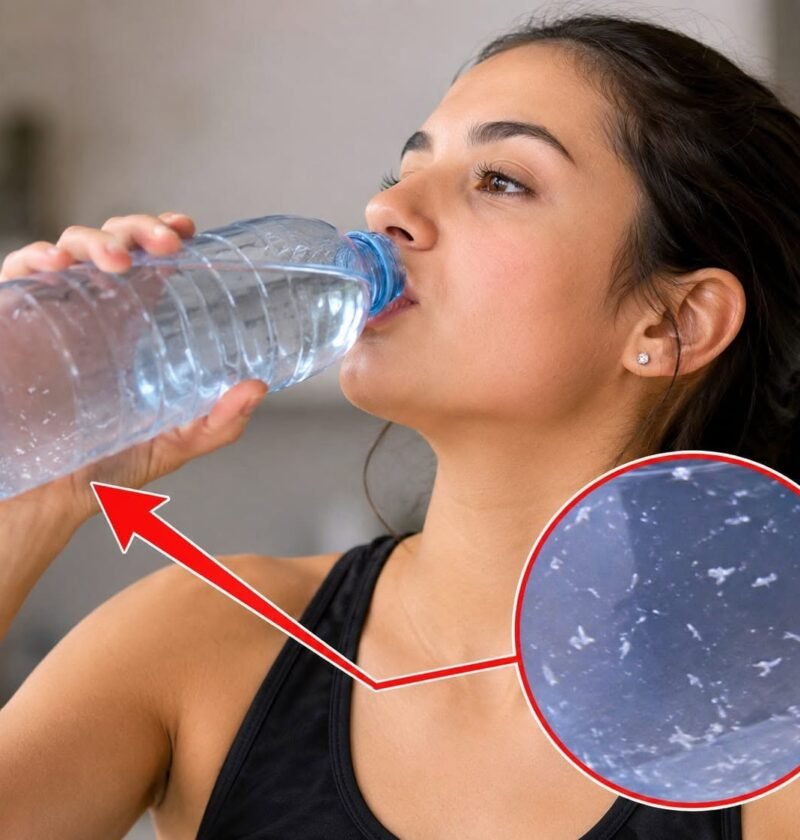
When viral posts ask if you have ever noticed mysterious white particles at the bottom of your water bottle—often pairing the question with alarmist warnings about toxic heavy metals, dangerous plastics, or mold—they are tapping right into our deep sensitivity about what we put into our bodies. When you are halfway through a sip of water and spot floating sediment, your stomach naturally drops.
From a clinical and material science standpoint, finding white particles in your reusable water bottle is almost never a sign of poison or microplastic decay. Instead, it usually comes down to simple chemistry and mineral buildup.
Here is the real breakdown of what those white flakes actually are, where they come from, and when you actually need to worry:
What Are Those White Particles? (The Real Culprits)
-
Calcium Carbonate and Mineral Scale (“Hard Water”):
-
The Reality: This is the #1 cause of white flakes in water bottles. If you fill your bottle from tap water that contains dissolved minerals (calcium and magnesium), as the water sits, evaporates, or experiences temperature changes, those minerals precipitate out of the liquid and bond together into tiny, chalky white flakes or a fine crust at the bottom.
-
-
Detergent and Soap Residue:
-
The Reality: If you wash your water bottle with dish soap or run it through the dishwasher and don’t rinse it exhaustively, microscopic soap films or hard-water-plus-soap reactions can dry into a powdery white film or residue that sloughs off into your next refill.
-
-
Degrading Bottle Linings or Silicone Seals:
-
The Reality: Over time, the rubber o-rings or silicone gaskets inside insulated metal bottle lids can break down, trap moisture, or accumulate mineral crust, releasing small particles into the liquid if they aren’t deep-cleaned regularly.
-
Are These Particles Dangerous to Drink?
-
For Hard Water Minerals: No. Swallowing calcium carbonate or magnesium flakes is completely harmless. These are the exact same minerals found naturally in mineral water and multivitamins.
-
For Soap Residue: While swallowing a trace amount of dried dish soap won’t poison you, it can leave a bitter or soapy taste and cause mild stomach irritation if it builds up.
-
The Real Danger—Biofilms and Mold: While hard water flakes are harmless, the dark or slimy spots that can grow around bottle lids and straws are a different story. If a bottle is kept damp and left unwashed, bacteria and mold (like Aspergillus or black mold) can form a biofilm, which can cause gastrointestinal upset, allergic reactions, or respiratory irritation.
How to Properly Clean and Prevent Buildup
Instead of throwing away your favorite water bottle out of fear, a simple maintenance routine keeps it crystal clear:
-
Daily Rinsing and Drying: Empty your bottle at the end of every day, wash it with warm soapy water, and leave the lid off to air dry completely. Moisture trapped in a sealed bottle is what breeds bacteria.
-
The Vinegar Soak for Mineral Scale: If stubborn white crust forms at the bottom of a metal or glass bottle, pour in a 50/50 mix of white distilled vinegar and warm water. Let it sit for 30 to 60 minutes. The acetic acid will naturally dissolve the calcium carbonate minerals, allowing you to rinse them right out.
-
Deep Clean the Gaskets: Periodically remove the silicone sealing ring inside your bottle’s lid using a butter knife or toothpick, scrub it clean, and make sure no trapped residue or mold is hiding underneath.
Are you noticing mineral buildup in a specific type of water bottle, or were you tracking down a viral health warning you saw online?