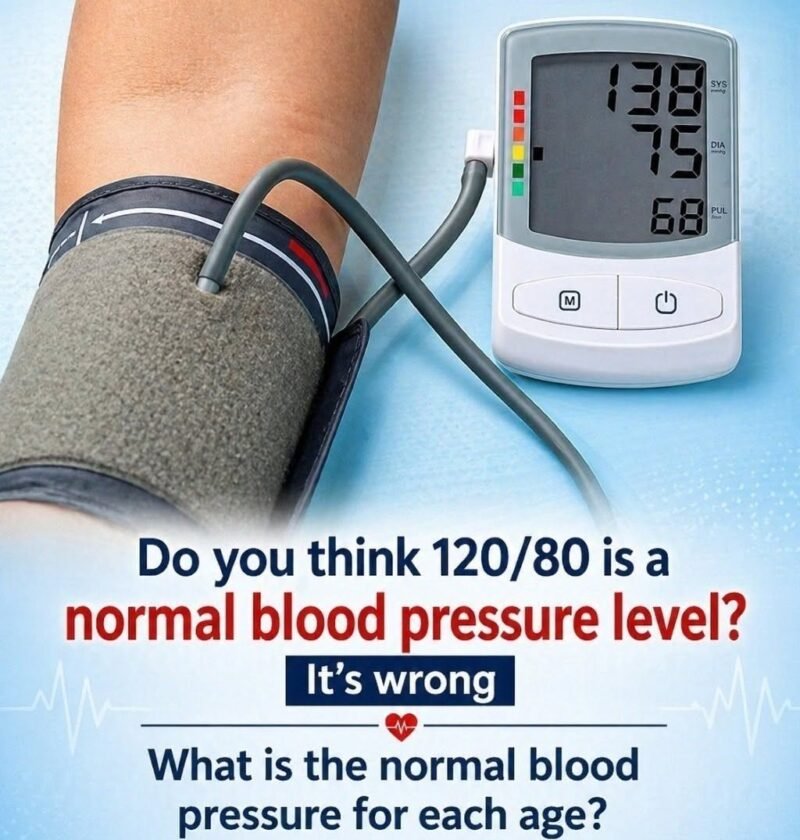
While average blood pressure tends to increase naturally as people age due to changes in arterial stiffness, the ideal clinical target for all adults is below 120/80 mmHg.
Blood pressure is measured using two numbers: systolic (the top number, representing pressure when the heart beats) and diastolic (the bottom number, representing pressure when the heart rests between beats).
Adult Blood Pressure Categories (Ages 18 and Older)
For adults, standard medical guidelines (such as those from the American Heart Association) classify blood pressure into these uniform categories, regardless of age:
| Category | Systolic (mmHg) | Diastolic (mmHg) | |
| Normal | Less than 120 | and | Less than 80 |
| Elevated | 120–129 | and | Less than 80 |
| Hypertension Stage 1 | 130–139 | or | 80–89 |
| Hypertension Stage 2 | 140 or higher | or | 90 or higher |
| Hypertensive Crisis | Higher than 180 | and/or | Higher than 120 (Seek immediate medical care) |
Average Blood Pressure Ranges by Age and Gender
While normal and healthy targets remain under 120/80 mmHg, population averages naturally drift upward over time. Below are typical averages by age group:
-
18 to 39 years:
-
Women: ~110/68 mmHg
-
Men: ~119/70 mmHg
-
-
40 to 59 years:
-
Women: ~122/74 mmHg
-
Men: ~124/77 mmHg
-
-
60 years and older:
-
Women: ~139/68 mmHg
-
Men: ~133/69 mmHg
-
Note on Older Adults: Even though averages climb into the 130s or higher in older decades, a reading consistently at or above 130/80 mmHg is still clinically classified as Stage 1 Hypertension. However, doctors may sometimes adjust target ranges individually for older adults to prevent dizziness or fainting from medications.
Blood Pressure in Children and Teens
Unlike adults, normal blood pressure for infants, children, and adolescents (ages 1 to 17) depends heavily on age, height, and sex. Pediatricians use specialized percentiles rather than a fixed number:
-
Newborns (up to 1 month): Typically range around 60–90 / 20–60 mmHg.
-
Children (Ages 1 to 13): Normal blood pressure is generally defined as being below the 90th percentile for their specific height, age, and gender.
-
Adolescents (Ages 14 to 18): Readings typically average around 110–120 / 65–80 mmHg. By age 13–15, adult thresholds (<120/80 mmHg) begin to apply.
Are you looking at these numbers for a specific age group or trying to interpret a recent reading?