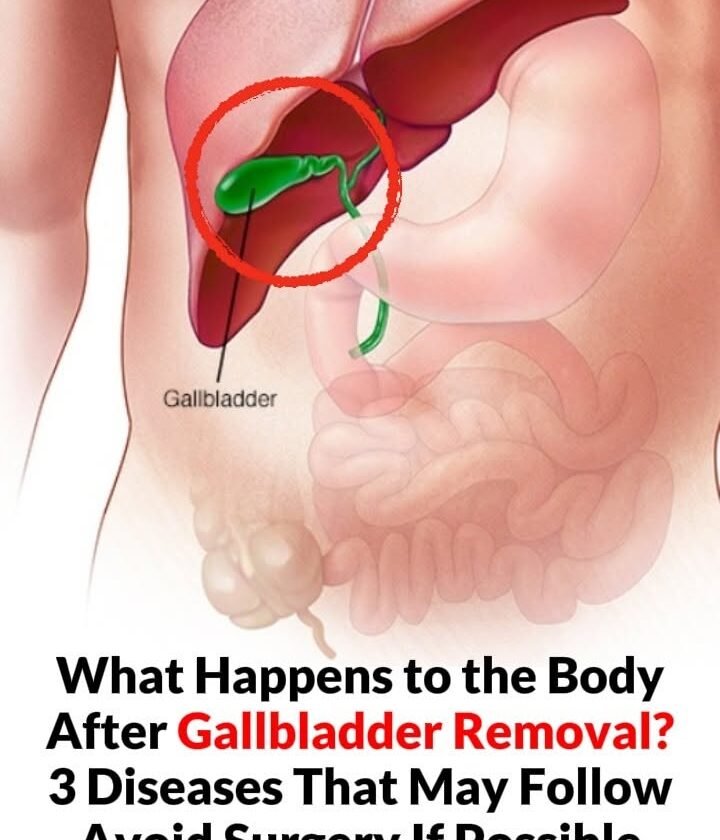
🩺 What Happens After Gallbladder Removal? Is It Really Better to Avoid Surgery?
The headline “3 diseases that may follow—avoid surgery if possible” is misleading. Gallbladder removal (cholecystectomy) is a common and generally safe operation, and you can live normally without a gallbladder. Your liver continues to make bile; it simply flows directly into the intestine instead of being stored in the gallbladder. (NIDDK)
What can happen after surgery?
Some people experience:
- Diarrhea or more frequent/softer stools — usually temporary, because bile enters the intestine more continuously. (NIDDK)
- Indigestion, nausea, or abdominal discomfort — these can occur after surgery and often improve with time. (nhs.uk)
- Surgical complications — uncommon problems include infection, bleeding, bile leakage, or injury to a bile duct. (nhs.uk)
Persistent digestive symptoms are sometimes called post-cholecystectomy syndrome, but this isn’t one specific disease; different underlying causes may need investigation. (nhs.uk)
❗ Should you avoid the operation?
Not if you have symptomatic or complicated gallstones and your doctor recommends surgery.
If gallstones cause no symptoms, treatment often isn’t necessary. But recurrent gallbladder attacks, inflammation, bile-duct obstruction, jaundice, or gallstone-related pancreatitis can require treatment. Untreated blockages can lead to serious complications. (NIDDK)
For symptomatic gallstones, surgery is generally the standard treatment. Nonsurgical treatments are reserved for selected situations and may not prevent stones from returning. (NIDDK)
🍽️ What about eating afterward?
Most people eventually return to a normal, healthy diet. Some find smaller meals and temporarily limiting very fatty foods more comfortable while recovering. (nhs.uk)
🚨 Seek medical attention after surgery if you develop
- Severe or worsening abdominal pain
- Fever or chills
- Yellow skin or eyes
- Persistent vomiting
- Increasing wound redness, swelling, or pus
- Significant swelling or pain in a leg
These can indicate complications requiring prompt assessment. (nhs.uk)
Bottom line: Gallbladder removal doesn’t normally cause three new diseases. It can cause temporary digestive changes and carries small surgical risks, but for people with troublesome or complicated gallstones, avoiding necessary surgery can itself carry serious risks.
If you’re considering gallbladder surgery, the key question is why your gallbladder needs to be removed—the answer can make a major difference in whether surgery is appropriate.