If you’re considering this as a health article, I would change the headline and the claim that surgery should be avoided. Current medical guidance does not support the idea that gallbladder removal routinely causes “3 diseases” or that people should generally avoid surgery.
What Really Happens to the Body After Gallbladder Removal?
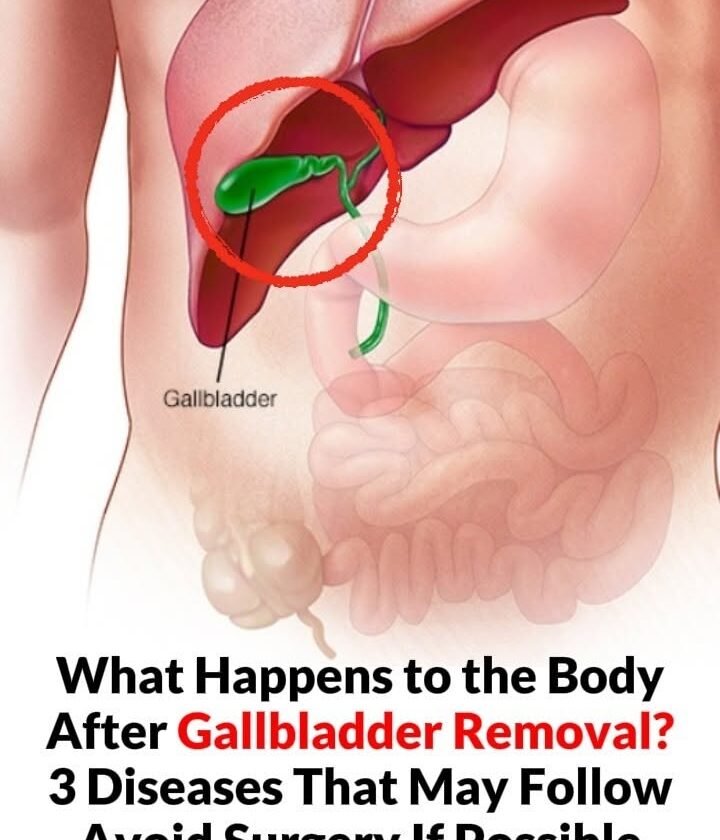
Gallbladder removal, or cholecystectomy, changes how bile is stored—not whether your body can make bile. The liver continues producing bile, but instead of being stored and concentrated in the gallbladder, bile flows more continuously into the small intestine. Most people can live normally without a gallbladder. NIDDK+1
3 problems that can occur after surgery
-
Diarrhea or more frequent stools
Because bile reaches the intestine more continuously, some people develop loose or frequent stools. This is often temporary, although persistent bile-acid diarrhea can occur and can be treated. Mayo Clinic+1 -
Abdominal discomfort or indigestion
Some people experience abdominal pain, bloating, nausea, or indigestion after surgery. These symptoms are sometimes grouped under post-cholecystectomy syndrome. Persistent symptoms deserve medical evaluation because they can have several causes. nhs.uk -
Surgical complications
Uncommon but important complications include bile leakage, infection, bleeding, or injury to the bile duct or nearby organs. nhs.uk+1
Should you avoid gallbladder surgery if possible?
Not necessarily. The appropriate decision depends on why the gallbladder is being removed.
People with silent gallstones—stones that aren’t causing symptoms—often don’t need treatment. NIDDK But symptomatic or complicated gallstones can cause recurrent attacks, gallbladder inflammation, bile-duct obstruction, or pancreatitis. In those situations, surgery is commonly recommended because leaving the underlying problem untreated can itself carry significant risks. NIDDK+1
There are nonsurgical approaches in selected circumstances, including medications that dissolve certain cholesterol stones or procedures such as ERCP for stones lodged in the bile duct. However, these approaches aren’t appropriate for everyone, and gallstones can recur with some nonsurgical treatments. NIDDK+1
Bottom line: Gallbladder removal does not generally “damage the body” or cause three inevitable diseases. Most people adapt well, while a minority experience digestive symptoms or surgical complications. The key question is whether the benefits of surgery outweigh its risks for the particular gallbladder problem you have.