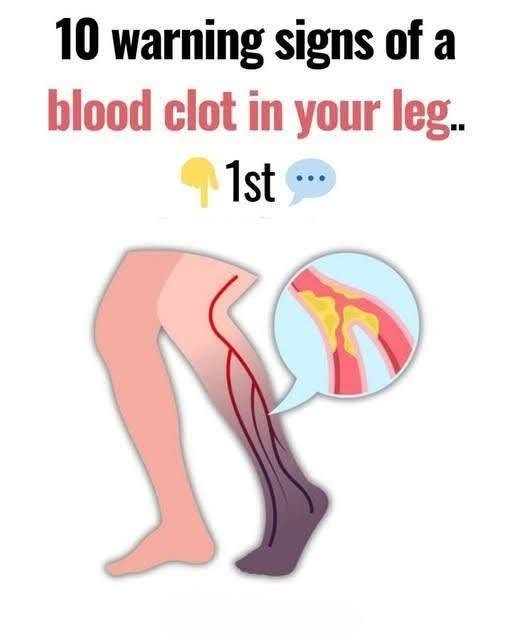
Unlike sensational viral health myths, recognizing the warning signs of a deep vein thrombosis (DVT)—a blood clot in a deep vein, usually in the leg—is critical medical knowledge. While minor leg cramps or muscle strains are common, a true blood clot presents specific, localized warning signs that should never be ignored.
Here are the key warning signs of a blood clot in the leg, what they mean, and when they require immediate medical attention.
1. Unilateral Swelling (Swelling in Just One Leg)
-
The Sign: Swelling that develops suddenly or progressively in only one leg (or one ankle/calf).
-
Why It Happens: The blood clot blocks normal blood flow through the vein, causing fluid to back up into the surrounding tissue. If both legs swell equally, it is usually caused by systemic issues (like heart or kidney fluid retention) rather than a DVT.
2. Localized Pain, Cramping, or Tenderness
-
The Sign: A deep, persistent ache, tenderness, or cramping sensation—frequently starting in the calf or thigh. It often worsens when standing, walking, or when gently pressing on the muscle.
-
Why It Happens: The obstruction and resulting inflammation irritate the surrounding muscle tissue and nerves.
3. Increased Skin Warmth
-
The Sign: The skin over the painful or swollen area feels noticeably warmer to the touch than the surrounding skin or your other leg.
-
Why It Happens: Restricted blood flow and localized inflammatory responses alter the temperature of the affected tissue.
4. Skin Discoloration (Redness or Paleness)
-
The Sign: The skin on the leg may turn red, purple, or, in some cases, pale or bluish around the affected area.
-
Why It Happens: Changes in superficial blood flow and severe venous congestion alter the surface appearance of the skin.
5. A Sense of Heavy Fatigue or Heaviness
-
The Sign: A persistent, unexplained feeling of heaviness, weakness, or deep fatigue in one leg, making it feel cumbersome or harder to move.
-
Why It Happens: Impaired circulation reduces the efficiency of the muscle and tissue environment.
6. Distended or Swollen Surface Veins
-
The Sign: Veins closer to the surface of the skin (superficial veins) become larger, more visible, or feel harder than usual.
-
Why It Happens: When deep veins are blocked by a clot, blood reroutes through smaller surface veins, causing them to distend.
🚨 Critical Warning Signs: When a Clot Travels (Pulmonary Embolism)
The primary danger of a DVT is that a piece of the clot can break loose, travel through the bloodstream, and lodge in the lungs, causing a pulmonary embolism (PE), which is a medical emergency.
Seek emergency medical care immediately if leg symptoms are accompanied by any of the following:
-
Sudden shortness of breath or difficulty breathing
-
Sharp chest pain or discomfort that worsens when taking a deep breath or coughing
-
A rapid heart rate or pulse
-
Unexplained lightheadedness, dizziness, or fainting
-
Coughing up blood
What to Do If You Suspect a DVT
-
Seek Prompt Medical Evaluation: If you notice persistent swelling, pain, and warmth in one leg—especially if you have risk factors like recent surgery, long-distance travel, immobility, or pregnancy—contact a healthcare provider or go to urgent care/emergency services immediately for an ultrasound evaluation.
-
Do NOT Massage the Area: If a clot is present, vigorously rubbing or massaging the leg can dislodge it. Avoid heavy exercise or deep tissue massage until a doctor has cleared you.