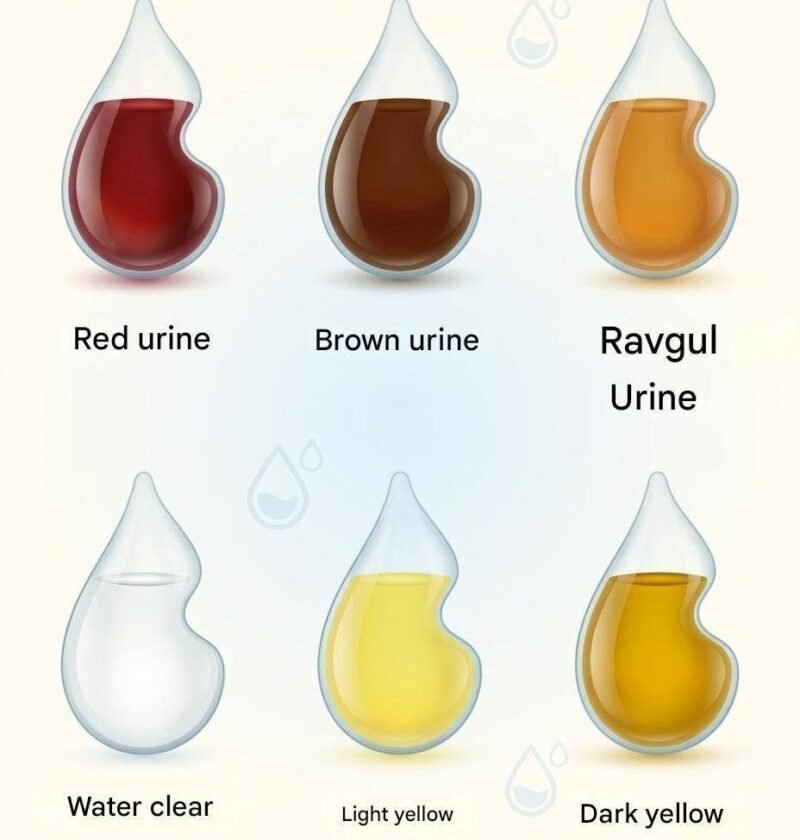
What does urine color tell you about your health?
Urine color can offer clues, but it can’t diagnose a condition by itself. Hydration, foods, medications, and supplements can all change its appearance.
-
🟨 Pale yellow: Usually a sign of adequate hydration.
-
🟡 Dark yellow/amber: Often means your urine is concentrated and you may need more fluids.
-
🟤 Brown or cola-colored: Can occur with severe dehydration, liver or bile problems, certain medications, or muscle breakdown. Seek medical advice promptly, particularly if it persists.
-
🔴 Pink or red: May be blood, but beets and some medications can also cause this color. Visible blood in urine should be medically evaluated, even if there is no pain.
-
🟠 Orange: Can result from dehydration or certain medications and supplements; persistent orange urine warrants evaluation.
-
🟢 Green: Uncommon, but some medications, dyes, or certain infections can cause it.
-
🔵 Blue: Rare and can be related to medications, dyes, or unusual metabolic conditions.
-
⚪ Cloudy or milky: May occur with a urinary infection, crystals, or other substances in the urine, particularly if accompanied by pain, burning, fever, or a strong odor.
🚨 When to get checked
Don’t rely on color alone. Seek medical care if you notice persistent unusual urine color, visible blood, brown/cola-colored urine, fever, painful urination, severe back/flank pain, or markedly reduced urine output.
Also, bright yellow urine after taking a B-complex vitamin is usually harmless and commonly results from riboflavin (vitamin B2).
If you tell me the exact color you’re seeing and whether you have any other symptoms, I can explain the most likely possibilities.