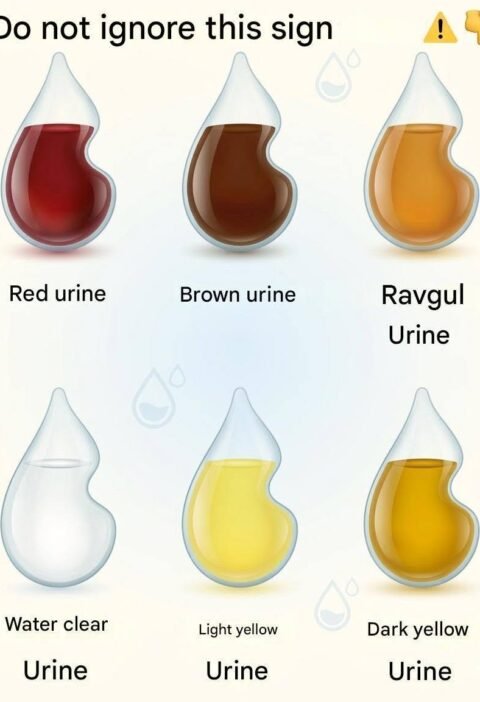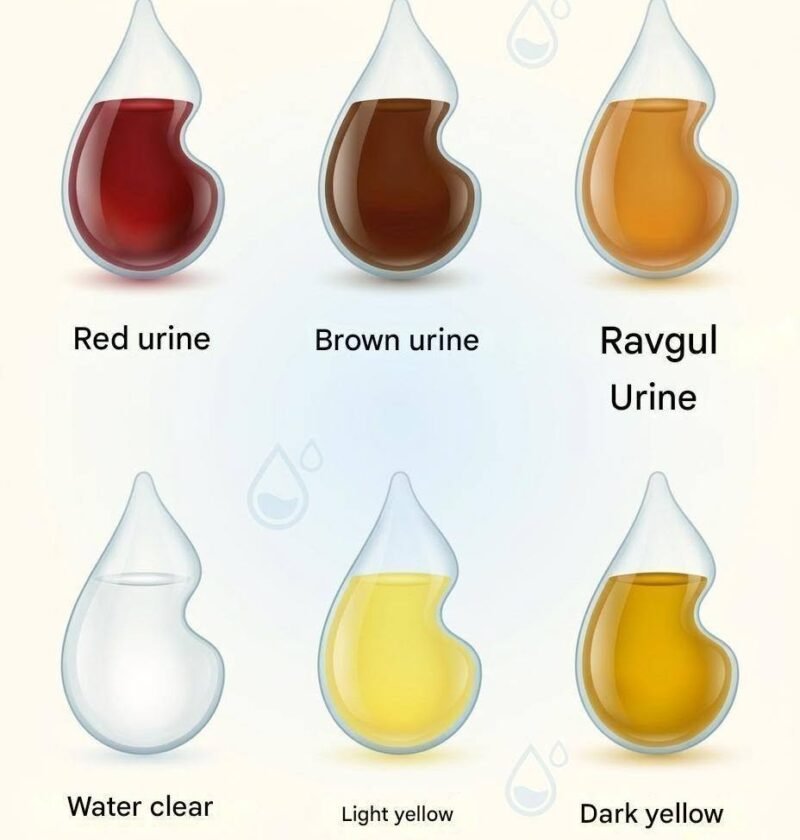
Urine color can give some clues about hydration and health, but color alone cannot diagnose a condition.
Common urine colors
-
🟨 Pale yellow: Usually well hydrated and normal.
-
🟡 Dark yellow/amber: Often means you’re dehydrated. Drink fluids and see whether it becomes lighter.
-
💧 Very clear/colorless: Often means you’re drinking a lot of water. Persistently excessive thirst and very frequent urination deserve medical attention.
-
🟠 Orange: Can result from dehydration or certain medicines and foods; persistent orange urine should be checked.
-
🩷 Pink/red: May indicate blood, although some foods and medicines can also cause this. Unexplained red or bloody urine should be medically evaluated.
-
🟤 Brown/tea-colored: Can occur with severe dehydration, liver problems, muscle injury, or certain medications. Seek medical advice if it persists.
-
🟢/🔵 Green or blue: Uncommon; can result from certain medications, dyes, or occasionally infections.
-
☁️ Cloudy: Sometimes caused by dehydration or crystals, but can also occur with a urinary infection, particularly if accompanied by burning, urgency, fever, or pain.
When to get checked
Seek medical advice for persistent unusual urine color, visible blood, brown urine, painful urination, fever, severe back/side pain, or a major change in how much you urinate.
One useful rule: pale yellow urine is generally a reasonable hydration target—you don’t need to force yourself to drink enough water to make your urine completely clear.