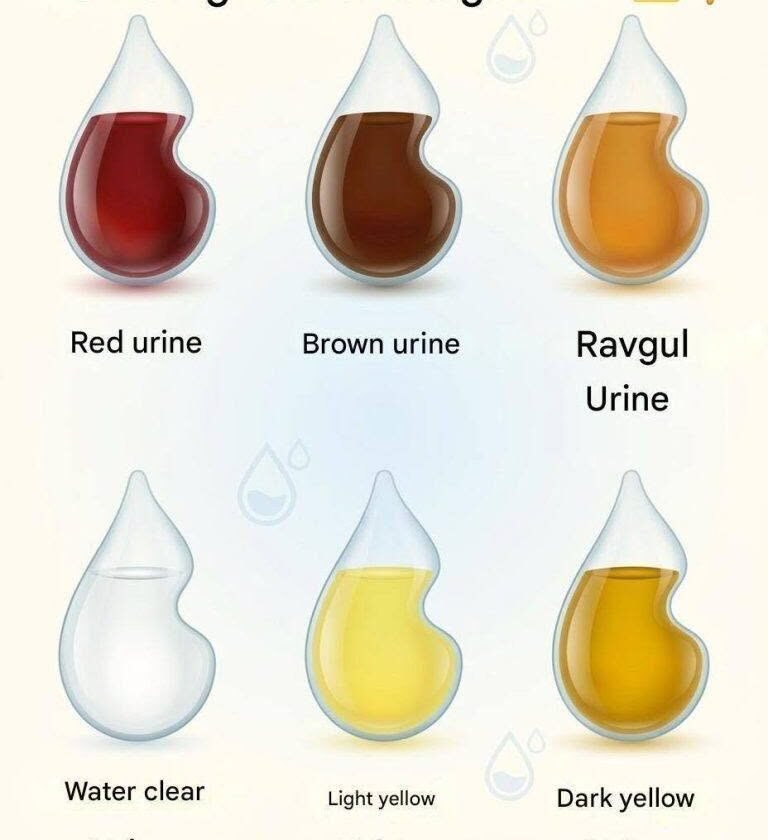
What Does the Color of Your Urine Say About Your Health?
Urine color can provide clues, but it cannot diagnose a disease by itself. Normal urine ranges from clear to pale yellow, and darker yellow usually means the urine is more concentrated, often because you haven’t had enough fluids.
🟡 Pale yellow
Usually normal and generally indicates adequate hydration.
🟠 Dark yellow or orange
Often associated with dehydration, but orange urine can also result from certain medicines or vitamins. If it stays orange—especially with yellow skin/eyes or unusually pale stools—medical evaluation is appropriate because liver or bile-duct problems can cause this appearance.
🩷 Pink or red
This can come from foods such as beets or rhubarb, but it can also represent blood in the urine from problems such as a urinary infection, kidney stone, enlarged prostate, or other conditions. Visible blood should be checked by a healthcare professional rather than assumed to be harmless.
🟤 Brown or cola-colored
Possible causes include severe dehydration, certain medicines or foods, liver/kidney problems, urinary infections, or muscle injury after extreme exercise. Persistent dark-brown urine deserves medical assessment.
☁️ Cloudy or milky
Cloudy urine can occur with a urinary tract infection or kidney stones. Other substances in the urine can also change its appearance.
🟢 Green or 🔵 blue
These unusual colors are often caused by medications, dyes or food coloring. Certain urinary infections can also produce green urine.
💊 Don’t forget medications and vitamins
Urine color can change dramatically because of medications and supplements. For example, some B vitamins can make urine bright yellow or yellow-orange, while several medicines can produce orange, greenish-blue or brown urine.
🚨 When should you get checked?
Seek medical advice if you have red/bloody urine, persistent dark-brown or orange urine, painful urination, fever, side/back pain, difficulty urinating, or a persistent unexplained change in urine color. A urinalysis can check for blood, infection, protein and other abnormalities that aren’t visible just by looking at the urine.