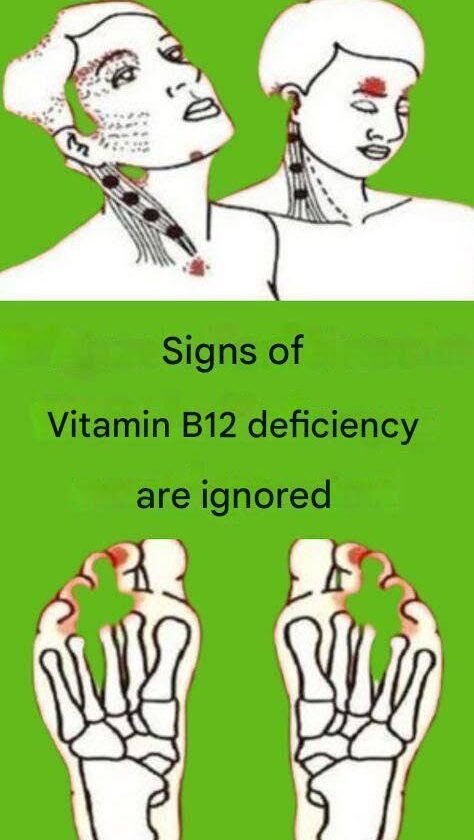
Signs of vitamin B12 deficiency that are often ignored
-
Constant tiredness and weakness — even after adequate sleep.
-
Pins and needles or numbness — especially in the hands and feet.
-
Brain fog and poor concentration — difficulty thinking clearly or remembering things.
-
Low mood, anxiety, or irritability — sometimes mistaken for a purely psychological problem.
-
Dizziness or headaches — potentially related to anemia.
-
Pale or slightly yellowish skin — which may occur with anemia.
-
A sore, red, or smooth tongue — sometimes with mouth ulcers.
-
Balance problems or muscle weakness — particularly when nerve function is affected.
-
Shortness of breath or heart palpitations — possible signs of anemia.
-
Changes in vision — uncommon, but potentially serious.
Not everyone develops all these symptoms, and having one or more does not necessarily mean you have a B12 deficiency.
Why these symptoms should not be ignored
B12 deficiency can affect the nervous system even when a person does not have anemia. Delayed treatment can lead to lasting nerve damage.
NICE
+1
What should you do?
-
Get blood tests: A clinician may recommend a vitamin B12 level and a complete blood count (CBC). Further tests may be needed if results are unclear.
-
Discuss risk factors: These include a vegetarian or vegan diet without adequate B12, digestive or absorption problems, certain stomach surgeries, and medications such as metformin.
-
Get appropriate treatment: B12 tablets or injections may be needed, depending on the cause and whether absorption is affected. Avoid treating yourself with high-dose supplements without assessing the cause.Diagnosis+2
Seek urgent medical assessment if you develop new or worsening numbness, difficulty walking, significant balance problems, or vision changes.
One question: Are you experiencing any of these symptoms yourself, or are you asking generally? I can help you understand which signs warrant testing and what to discuss with a doctor.