“23 Strange Signs Your Kidneys Might Be in Trouble” — what should you actually watch for?
The headline is a little misleading because early chronic kidney disease often causes no symptoms at all. Symptoms tend to appear later, which is why blood and urine testing is much more reliable than trying to diagnose kidney disease from a symptom list.
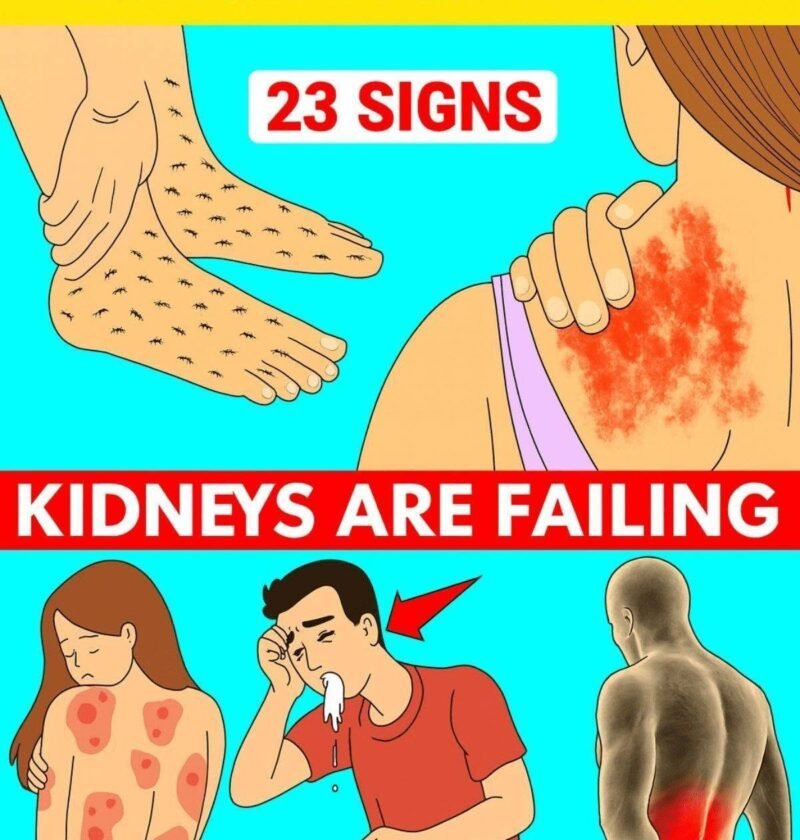
Here are 23 possible signs or clues worth knowing:
- Foamy or persistently bubbly urine — can indicate protein in the urine.
- Blood or pink/cola-colored urine — may indicate blood, although there are other causes.
- Urinating more often, particularly at night.
- Urinating much less than usual.
- Swollen ankles or feet.
- Swelling of the hands or face.
- Puffy eyes, especially in the morning.
- Unexplained fatigue or weakness.
- Difficulty concentrating or “brain fog.”
- Trouble sleeping.
- Poor appetite.
- Nausea or vomiting.
- Unintentional weight loss.
- Dry or itchy skin.
- Muscle cramps, including nighttime cramps.
- Numbness or tingling.
- Shortness of breath.
- Changes in taste, sometimes including a metallic or unpleasant taste.
- Bad or ammonia-like breath.
- Changes in blood pressure, particularly difficult-to-control high blood pressure.
- Feeling unusually cold.
- Persistent changes in urine appearance or output.
- Chest discomfort or breathing difficulty in advanced kidney disease.
⚠️ But these symptoms don’t prove kidney disease
Many of these signs—fatigue, cramps, swelling, frequent urination, itching, and poor sleep—have many other possible causes. Having one doesn’t mean your kidneys are failing.
More importantly, kidney disease can be completely silent. Diabetes, high blood pressure, heart disease, and a family history of kidney failure are important risk factors.
🧪 The best way to check your kidneys
If you’re concerned, ask a healthcare professional about:
- eGFR — a blood test estimating kidney filtration.
- Urine albumin-to-creatinine ratio (uACR) — checks for albumin/protein leaking into urine.
- Blood pressure measurement.
These tests can detect kidney disease before symptoms become obvious.
🚨 Seek prompt medical attention for visible blood in the urine, severe shortness of breath, chest pain, markedly reduced urine output, or rapidly worsening swelling.