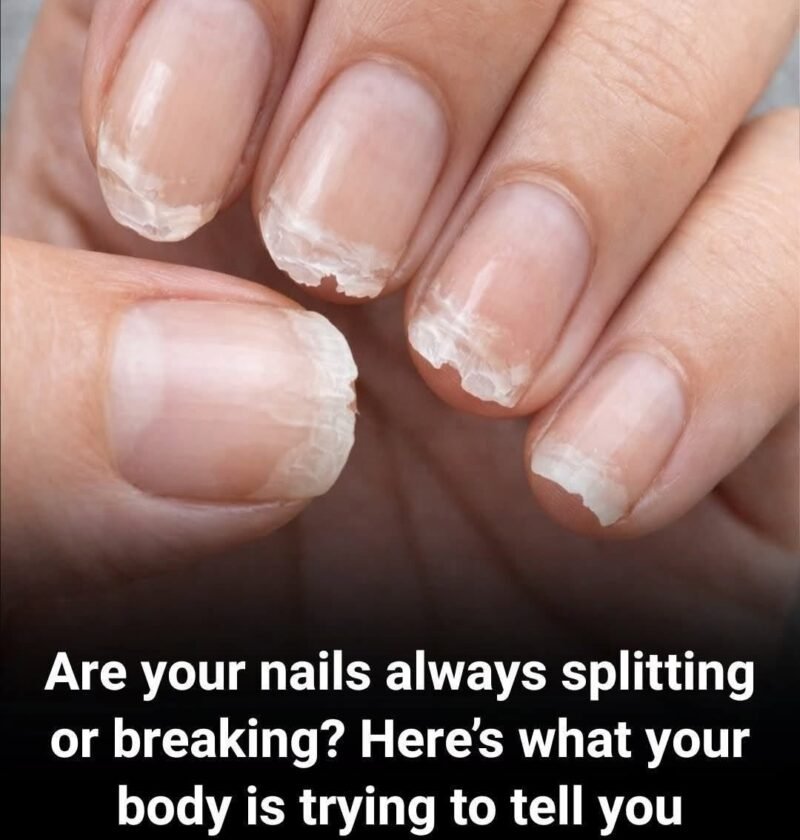
If you’re fact-checking “Weak or Brittle Nails: What Your Body Is Trying to Tell You,” brittle nails can sometimes provide clues about health, but they usually don’t point to one specific deficiency or disease.
Common causes
Repeated water or chemical exposure: Frequent washing, cleaning products, and wet work can make nails brittle. (nhs.uk
)
Normal aging: Nails naturally become more brittle as we get older. (nhs.uk
)
Iron deficiency: Low iron can cause nail changes, particularly thin or spoon-shaped nails. (nhs.uk
)
Thyroid disorders: Both underactive and overactive thyroid disease can produce dry, brittle, peeling, or otherwise abnormal nails. (aad.org
)
Fungal infection: Nails that become brittle, thickened, discolored, crumbly, or separated from the nail bed may have a fungal infection. (aad.org
)
Skin conditions such as psoriasis can also affect nails. (nhs.uk
)
What you can do
Keep nails trimmed, moisturize your hands and nails regularly, and use gloves when your hands are frequently exposed to water or cleaning chemicals. (nhs.uk
)
Don’t automatically start iron, biotin, or other supplements just because your nails are brittle. If the change is persistent or unexplained, a healthcare professional can determine whether testing for problems such as iron deficiency or thyroid disease is appropriate.
See a clinician if a nail changes color or shape, becomes detached, or develops pain, redness, swelling, or warmth without an obvious explanation. (nhs.uk
)
Bottom line: Brittle nails can occasionally be a clue to an underlying problem, but most cases have relatively ordinary explanations—and your nails alone cannot diagnose a nutritional deficiency or disease.