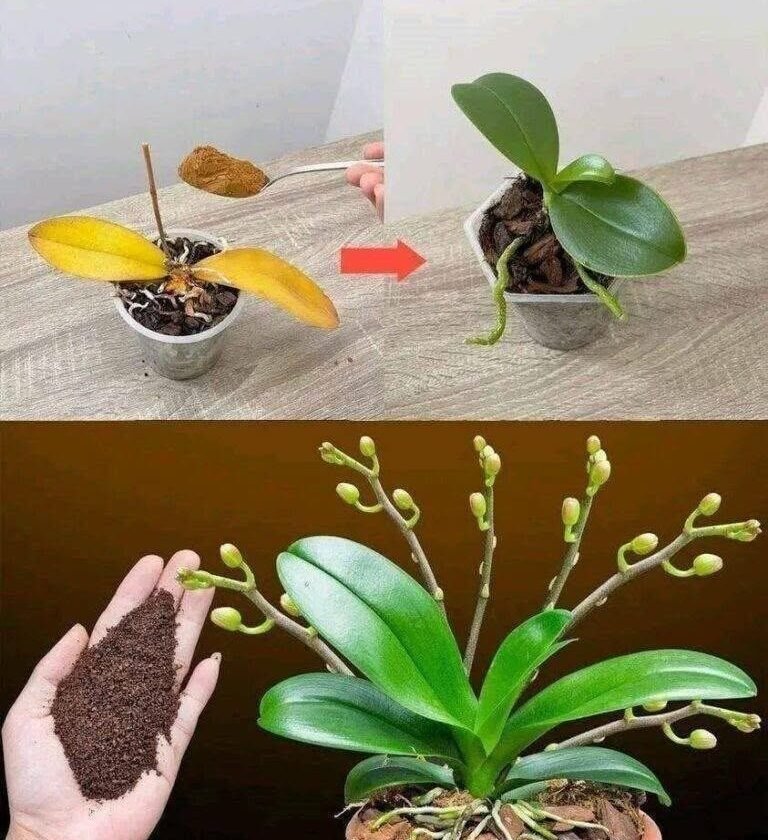
That “just one teaspoon” claim is usually too good to be true. There is no universal household ingredient that reliably makes an orchid suddenly produce lots of flowers.
If the teaspoon recipe is for something like sugar, rice water, baking soda, cinnamon, milk, or vinegar, I would not recommend adding it blindly. Concentrated household ingredients can damage orchid roots or encourage mold and pests.
For a common Phalaenopsis orchid, flowering is much more reliably encouraged by:
-
Bright, indirect light—insufficient light is a common reason orchids don’t rebloom.
-
Watering thoroughly but allowing excess water to drain; don’t keep the roots constantly wet.
-
A diluted orchid fertilizer during active growth, following the product directions rather than guessing with teaspoons.
-
An airy orchid-growing medium such as bark and a pot with good drainage.
-
Appropriate temperatures and a modest day/night temperature difference can help trigger flowering in many Phalaenopsis orchids.
If you tell me what the “one teaspoon” ingredient is, I can tell you whether the recipe is actually useful or could harm your orchid.